Public Debt
Kenya Domestic Debt Surge: Fiscal Crossroads
Policymakers face a delicate balance between funding infrastructure and maintaining fiscal sustainability, with domestic loans now accounting for a significant portion of Kenya’s GDP. The surge underscores risks of crowding out private sector lending

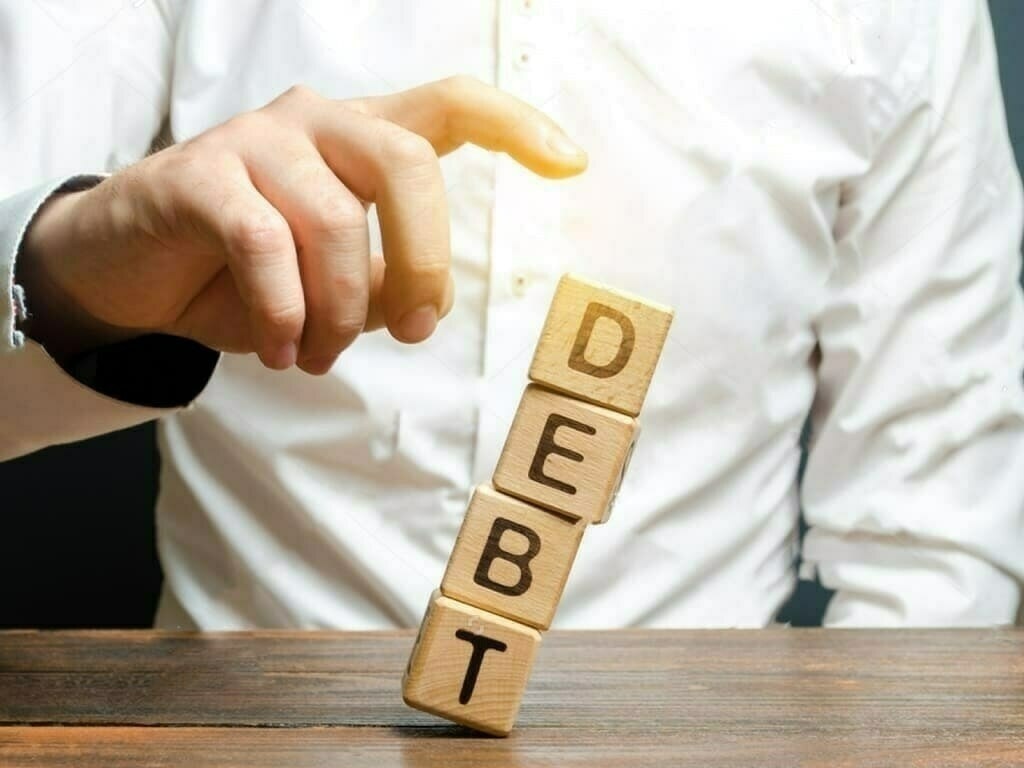
Kenya Domestic Debt Surge: Fiscal Crossroads analyses rapid local borrowing, IMF reforms and lessons from Ghana and Zambia debt crises.
Kenya’s Borrowing Model Faces a Critical Test
Kenya’s fiscal trajectory is entering a decisive phase. While the country’s public debt—estimated at about Sh12 trillion ($92 billion)—has long attracted scrutiny from investors and multilateral lenders, a deeper structural transformation is now underway: the rapid expansion of domestic borrowing.
For much of the past decade, Kenya financed its ambitious infrastructure programme through external borrowing. Sovereign Eurobonds, bilateral loans and multilateral financing funded flagship projects designed to position the country as East Africa’s economic gateway.
But global financial conditions have shifted dramatically.
As borrowing costs in international markets rise and investor appetite for emerging market debt fluctuates, Kenya has increasingly turned to its domestic financial system for financing.
The result is a sharp and accelerating rise in internal debt.
Domestic Debt Crosses the Sh7 Trillion Mark
According to data from the Central Bank of Kenya, the country’s domestic debt reached Sh7.052 trillion (about $54 billion) by February 2026—the first time it has crossed the Sh7 trillion threshold.
What is particularly striking is the speed of this increase.
Kenya required nearly ten years to reach Sh4 trillion ($31 billion) in domestic borrowing, a milestone achieved in December 2021. Yet the pace has accelerated dramatically since then. Domestic debt climbed to Sh5 trillion ($38 billion) in December 2023 and crossed Sh6 trillion ($46 billion) the following year.
The leap to Sh7 trillion ($54 billion) occurred in just fourteen months.
Such rapid expansion reflects mounting fiscal pressures as well as Kenya’s diminishing access to cheaper international financing.
Global Financial Shifts Are Reshaping Borrowing
The shift toward domestic borrowing is partly a consequence of tightening global liquidity.
Since 2022, major central banks in advanced economies have raised interest rates to combat inflation. For emerging economies such as Kenya, this has translated into significantly higher borrowing costs in international capital markets.
Domestic borrowing, by contrast, offers a key advantage: it reduces exposure to currency risk.
When the Kenyan shilling weakens against the US dollar, the cost of repaying foreign-currency debt rises sharply. Borrowing locally in shillings shields the government from these exchange-rate shocks.
But while domestic borrowing reduces external vulnerabilities, it introduces new risks into the economy.
The Crowding-Out Risk in Kenya’s Financial System
Economists warn that excessive government borrowing from domestic markets can distort the financial system.
Banks and institutional investors often prefer purchasing government securities rather than lending to private businesses. Treasury bonds issued by the National Treasury of Kenya offer relatively high yields with minimal risk compared to commercial lending.
This dynamic creates what economists call the crowding-out effect.
As financial institutions allocate more capital to government debt, the supply of credit available to businesses shrinks. Small and medium-sized enterprises—which are critical for employment and innovation—are often the most affected.
Over time, this can slow private-sector investment and weaken long-term economic growth.
Rising Debt Service Is Straining the Budget
The rapid growth in domestic borrowing has also intensified pressure on Kenya’s national finances.
Interest payments on government debt have risen steadily, absorbing a growing share of public revenues.
In recent fiscal years, analysts estimate that nearly half of Kenya’s ordinary government revenue has been directed toward debt servicing.
This leaves less fiscal space for development spending, social programmes and infrastructure investment.
Kamau Thugge, Governor of the Central Bank of Kenya, has previously warned that fiscal consolidation is essential to stabilise the country’s debt trajectory.
“Kenya’s public debt remains sustainable, but it is important that we maintain fiscal discipline and gradually reduce the fiscal deficit,” Thugge said in remarks accompanying monetary policy updates.
The challenge, however, lies in implementing reforms without undermining economic growth.
IMF Negotiations Signal Policy Reset
Kenya is currently seeking a new financing arrangement with the International Monetary Fund, a programme that policymakers hope will anchor fiscal reforms and reassure investors.
During a recent IMF mission to Nairobi led by mission chief Haimanot Teferra, discussions focused on the country’s macroeconomic outlook and fiscal risks.
“The IMF staff team engaged with the authorities on recent macroeconomic and policy developments and key risks, including potential spillovers from developments in the Middle East,” Teferra said after the mission.
She added that discussions emphasised the need to strengthen fiscal discipline and build resilience against external shocks.
The negotiations are expected to continue during the IMF–World Bank Spring Meetings in Washington, where Kenyan officials hope to move closer to securing a new IMF-supported programme.
Lessons from Ghana and Zambia
Kenya’s fiscal trajectory is also being closely watched in the context of recent debt crises across Africa.
Countries such as Ghana and Zambia experienced severe fiscal distress after debt burdens became unsustainable, forcing them into painful restructuring processes supported by the IMF.
Zambia defaulted on its sovereign debt in 2020, while Ghana sought IMF assistance in 2022 after its debt-to-GDP ratio surged beyond manageable levels.
These cases have become cautionary examples for policymakers across the continent.
Kenya has so far avoided such outcomes, thanks in part to its relatively diversified economy and stronger financial institutions. Nevertheless, the rapid growth of domestic borrowing has heightened concerns that the country could face similar pressures if fiscal reforms are delayed.
A Defining Moment for Kenya’s Economic Strategy
For Kenya, the surge in domestic borrowing reflects both ambition and constraint.
The government’s infrastructure-driven development strategy has delivered visible improvements in transport, energy and connectivity. Yet financing these ambitions through sustained borrowing has created rising fiscal obligations.
The country now faces a pivotal economic moment.
A credible fiscal adjustment—supported by international partners such as the IMF and the World Bank Group—could stabilise Kenya’s debt trajectory and restore investor confidence.
But achieving this balance will require careful policymaking.
Too aggressive a fiscal tightening risks slowing economic growth and triggering political backlash. Too slow a reform path could deepen investor concerns and push borrowing costs even higher.
For Nairobi, the message embedded in the rapid rise of domestic debt is clear.
Kenya’s long-term economic stability will depend not simply on how much it borrows—but on how effectively it manages the delicate equilibrium between growth, fiscal discipline and financial credibility.

Public Debt
Kenya IMF Financing Puzzle: Debt Reform Diplomacy
Recent engagements between Kenyan officials and IMF staff signal progress, but key sticking points remain around fiscal discipline and revenue reforms. The negotiations underscore the delicate diplomacy required to align reform targets with domestic political constraints.
Kenya IMF Financing Puzzle: Debt Reform Diplomacy shapes Nairobi’s push for a new IMF programme as debt pressures and political realities collide.
Kenya’s IMF Financing Puzzle: Debt, Diplomacy and Reform
Kenya’s renewed effort to secure a fresh financing arrangement with the International Monetary Fund is evolving into a complex economic and political balancing act—one that reflects both the country’s fiscal vulnerabilities and its strategic importance within Africa’s financial architecture.
The negotiations, which intensified following a February–March technical mission to Nairobi led by IMF mission chief Haimanot Teferra, are expected to move to a decisive stage during the IMF–World Bank Spring Meetings in Washington this April.
For Nairobi, the stakes extend far beyond simply unlocking a new tranche of financing. The talks represent an attempt to recalibrate Kenya’s macroeconomic credibility at a moment when debt levels, domestic politics and global financial uncertainty are converging.
A Programme Designed to Stabilise Confidence
Kenya’s previous IMF arrangement—approved in April 2021 under the Extended Fund Facility (EFF) and Extended Credit Facility (ECF)—was intended to provide $3.6 billion in support as the country navigated the economic aftershocks of the pandemic.
By the time negotiations stalled in late 2024, Kenya had already drawn approximately $3.12 billion from the facility. The final review, however, was never completed.
Instead, officials from the IMF and the National Treasury of Kenya opted to discontinue the ninth review and begin discussions for a new programme framework.
This decision reflected both economic realities and shifting political constraints.
For international investors, the continuation of an IMF-backed programme remains a critical signal of macroeconomic discipline. Countries operating under IMF programmes are generally perceived as having a credible policy anchor, which helps reduce borrowing costs and stabilise market sentiment.
Without that anchor, Kenya’s financing outlook could become significantly more volatile.
Debt Pressures Reshaping Fiscal Strategy
The urgency behind Nairobi’s IMF negotiations is rooted in the rapid expansion of public debt.
Over the past decade, Kenya has financed large-scale infrastructure projects—from railways and highways to energy investments—through a combination of external borrowing and domestic bond markets.
The result is a debt stock now exceeding Sh12 trillion, representing roughly 70 percent of the country’s Gross Domestic Product.
More striking, however, is the accelerating pace of domestic borrowing.
According to the Central Bank of Kenya, domestic debt crossed the Sh7 trillion mark in early 2026, reaching approximately Sh7.052 trillion. The milestone came just fourteen months after domestic borrowing surpassed Sh6 trillion.
This trajectory highlights a structural shift in Kenya’s financing model.
As access to international capital markets became more expensive—due to rising global interest rates and investor concerns about emerging-market risk—Kenya increasingly turned to local lenders.
While domestic borrowing reduces exposure to foreign currency risk, it also creates new pressures. Heavy government borrowing from local markets can crowd out private sector credit, potentially slowing investment and economic growth.
The Politics of Fiscal Reform
Yet Kenya’s negotiations with the IMF are not occurring in a political vacuum.
One of the defining moments that disrupted the previous programme occurred in June 2024, when mass protests erupted across the country over proposed tax increases contained in the government’s Finance Bill.
The demonstrations, led largely by younger Kenyans mobilising through social media, quickly transformed into a wider critique of austerity policies associated with IMF-backed fiscal reforms.
Many protesters argued that tax hikes were disproportionately burdening households already grappling with rising living costs and unemployment.
Faced with mounting public anger, the government withdrew several controversial measures—undermining revenue targets that had formed a core component of the IMF programme.
The episode exposed a broader challenge confronting policymakers: implementing fiscal consolidation in a democratic environment where economic hardship can quickly translate into political resistance.
For IMF negotiators, the lesson was clear. Future programmes must be politically sustainable, not just technically sound.
What the New Programme May Look Like
Although negotiations are ongoing, several themes are emerging as likely pillars of a new IMF arrangement.
First, fiscal consolidation will remain central. Kenya is expected to pursue gradual deficit reduction through improved tax administration and spending discipline rather than abrupt tax increases.
Second, governance reforms are likely to feature prominently. The IMF has repeatedly emphasised the importance of transparency in public procurement, state-owned enterprises and debt management.
Third, the programme is expected to include safeguards for social spending. IMF programmes increasingly incorporate provisions aimed at protecting vulnerable populations from the impact of fiscal adjustment.
For Kenya, such protections are politically essential.
Finally, the new arrangement will likely prioritise debt sustainability—ensuring that the government’s borrowing trajectory stabilises over the medium term.
The Global Dimension of Kenya’s Negotiations
Kenya’s IMF talks are unfolding against a turbulent global economic backdrop.
Geopolitical tensions in the Middle East have introduced new uncertainties around energy prices and global trade flows. For an oil-importing economy like Kenya, higher energy prices can quickly translate into inflationary pressures and fiscal strain.
Moreover, investor sentiment toward emerging markets remains fragile, influenced by tightening monetary policies in advanced economies.
In this environment, the IMF programme serves not only as a source of financing but also as a form of economic insurance—providing credibility and policy guidance during periods of external volatility.
A Delicate Economic Balancing Act
For Nairobi’s policymakers, the path ahead requires navigating competing priorities.
They must convince international lenders that Kenya remains committed to fiscal discipline while simultaneously addressing domestic concerns about inequality and economic hardship.
Too much austerity could provoke renewed political unrest. Too little reform could undermine investor confidence.
The upcoming IMF–World Bank Spring Meetings in Washington may therefore represent a decisive moment.
If negotiations progress smoothly, officials hope the IMF Executive Board could approve a new programme before the close of Kenya’s fiscal year in June.
Such an outcome would provide much-needed policy certainty for Africa’s sixth-largest economy.
But it would also underscore a deeper reality: Kenya’s long-term economic stability will depend not only on international financing, but on its ability to align fiscal reform with the expectations—and patience—of its own citizens.


Stanbic Women Finance Surge in Kenya

Stanbic Bank East Africa’s AI Risk Transformation

Joe Sang: Inside Kenya’s Fuel System Breakdown


-
 Economy & Policy7 days ago
Rwanda Tops 2026 Investment Attractiveness Index
-

 Commercial Banking6 days ago
Kenya Banks Competitive Growth Insights 2026
-
 Commercial Banking3 days ago
Standard Bank Growth Plan Faces Africa Risks
-

 Top Banks6 days ago
Top 10 Capitalized Banks in East Africa 2025
-

 Boardroom Leadership5 days ago
East Africa Women CEOs 2025 Rankings
-

 Entrepreneur5 days ago
East Africa’s Richest 2025: Top 10 Revealed
-
 Commercial Banking7 days ago
Standard Bank Ethiopia: Measured Entry Strategy
-

 Insurance6 days ago
Top 10 Capitalized Insurers in East Africa 2025