Capital Markets
East Africa Capital Markets Integration 2026
By connecting financial markets in Rwanda, Burundi, South Sudan, and the DR Congo, the EAC CMI project strengthens regional financial integration. This is expected to enhance investor confidence in East Africa’s frontier markets.

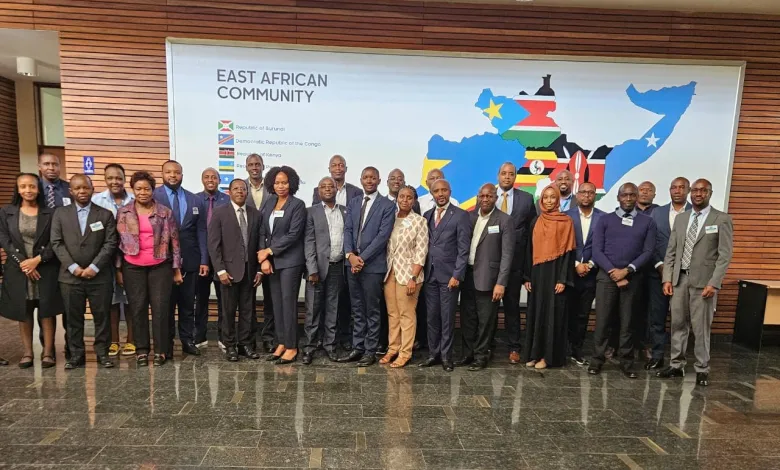
East Africa revives regional stock exchange linkage to unlock cross-border liquidity, expand investor access and deepen frontier capital markets.
East Africa is reviving a long-delayed plan to electronically integrate its stock exchanges under the East African Capital Markets Infrastructure (EACMI) framework, a move that could materially reshape frontier capital flows across the region.
The integration effort spans Kenya, Uganda, Tanzania, Rwanda, Burundi, South Sudan and the Democratic Republic of the Congo.
For global institutional investors, the 2026 revival signals a strategic pivot toward regional capital pooling rather than isolated national exchanges competing for limited liquidity.
Regional Exchange Interoperability Framework
The project centers on electronically linking trading engines, clearing houses and central securities depositories across participating markets.
The Nairobi Securities Exchange (NSE), East Africa’s most liquid bourse, would function as a regional anchor. Complementary systems at the Uganda Securities Exchange (USE) and the Dar es Salaam Stock Exchange (DSE) would integrate via harmonized digital interfaces.
Historically, fragmentation limited cross-border participation. A Kenyan investor seeking Tanzanian equities faced custodial friction, FX conversion complexity and settlement barriers.
Electronic linkage seeks to eliminate those constraints by creating seamless order routing and interoperable settlement architecture.
From an intelligence perspective, interoperability improves price discovery, narrows bid-ask spreads and enhances foreign portfolio participation.
Cross-Border Liquidity Amplification Strategy
Combined market capitalization across core East African exchanges exceeded approximately $40 billion at year-end 2025, yet daily turnover remains shallow relative to peer frontier blocs.
Capital fragmentation has historically resulted in:
- Thin trading volumes
- High volatility
- Illiquidity discounts
- Limited IPO scalability
Integration could unlock regional pension capital estimated above $25 billion across Kenya, Uganda and Tanzania (regional estimates, 2025).
If even a modest 10–15% of regional pension allocations flow cross-border by 2027, aggregate trading volumes could expand materially.
Liquidity amplification is particularly important as governments seek alternatives to external Eurobond borrowing.
Digital Clearing Harmonization Architecture
A critical component of the 2026 revival is clearing and settlement synchronization.
Coordination with central banks — including the Central Bank of Kenya — will determine how cross-currency settlement risk is mitigated.
Currencies involved include:
- Kenyan shilling
- Ugandan shilling
- Tanzanian shilling
- Rwandan franc
- Congolese franc
Absent monetary union, FX exposure remains a structural variable. However, digital harmonization can shorten settlement cycles and reduce transaction friction.
Technology modernization across exchanges since 2020 improves feasibility relative to earlier stalled attempts in 2014–2018.
Frontier Equity Consolidation Momentum
Globally, smaller exchanges have increasingly pursued scale via alliances or consolidation.
West Africa’s BRVM operates as a unified exchange model. East Africa’s approach differs — interoperability without institutional merger.
Inclusion of the Democratic Republic of the Congo introduces longer-term upside potential tied to mining, energy and infrastructure listings.
If mineral and infrastructure corporates list regionally rather than offshore, domestic capital retention could increase.
For global funds, scale is critical. Many institutional investors avoid markets with daily turnover below minimum liquidity thresholds. Regional consolidation addresses that structural constraint.
Institutional Capital Mobilization Catalyst
Regional pension funds and insurance pools remain under-diversified geographically.
Integration could facilitate:
- Cross-listed infrastructure bonds
- Regional exchange-traded funds (ETFs)
- SME growth board expansion
- Corporate bond syndication
As sovereign borrowing costs remain elevated in 2026, domestic capital mobilization becomes strategically important.
Deeper capital markets also reduce systemic reliance on banking sector financing — a recurring vulnerability in frontier economies.
Execution Risks and Governance Alignment
Previous integration efforts faltered due to:
- Regulatory misalignment
- Political coordination gaps
- Technology incompatibility
- Broker incentive resistance
The 2026 reboot coincides with broader digital infrastructure advances across East Africa, including payments modernization and digital identity expansion.
However, successful execution will require sustained cooperation through at least 2028.
Without harmonized listing rules, tax treatment alignment and investor protection standards, technological linkage alone will not guarantee liquidity deepening.
Strategic Outlook: Regional Markets Inflection
The East African Capital Markets Infrastructure revival represents a structural shift from fragmented national exchanges toward digitally synchronized regional capital architecture.
By advancing:
- Regional Exchange Interoperability Framework
- Cross-Border Liquidity Amplification Strategy
- Digital Clearing Harmonization Architecture
- Frontier Equity Consolidation Momentum
East Africa is positioning itself as a more investable frontier bloc.
If integration meaningfully increases turnover by 2027–2028, the region could improve eligibility for broader frontier market indices, attracting passive institutional inflows.
For global investors, the opportunity lies not merely in individual equities, but in the structural re-rating that often accompanies liquidity deepening.
In 2026, East Africa’s capital markets integration push may prove less visible than sovereign debt issuance headlines — but potentially more transformative over the long term.



Stanbic Women Finance Surge in Kenya

Stanbic Bank East Africa’s AI Risk Transformation

Joe Sang: Inside Kenya’s Fuel System Breakdown


-

 Economy & Policy7 days ago
Rwanda Tops 2026 Investment Attractiveness Index
-

 Commercial Banking6 days ago
Kenya Banks Competitive Growth Insights 2026
-

 Commercial Banking3 days ago
Standard Bank Growth Plan Faces Africa Risks
-

 Top Banks6 days ago
Top 10 Capitalized Banks in East Africa 2025
-

 Boardroom Leadership5 days ago
East Africa Women CEOs 2025 Rankings
-

 Entrepreneur5 days ago
East Africa’s Richest 2025: Top 10 Revealed
-

 Commercial Banking7 days ago
Standard Bank Ethiopia: Measured Entry Strategy
-

 Insurance6 days ago
Top 10 Capitalized Insurers in East Africa 2025