Women in Business
AgriIntelligence: Sara Menker’s Food AI
From Wall Street to shaping global food systems: Sara Menker saw the gaps in agriculture data before anyone else. Learn how Gro Intelligence
is predicting supply shocks and informing policy worldwide.

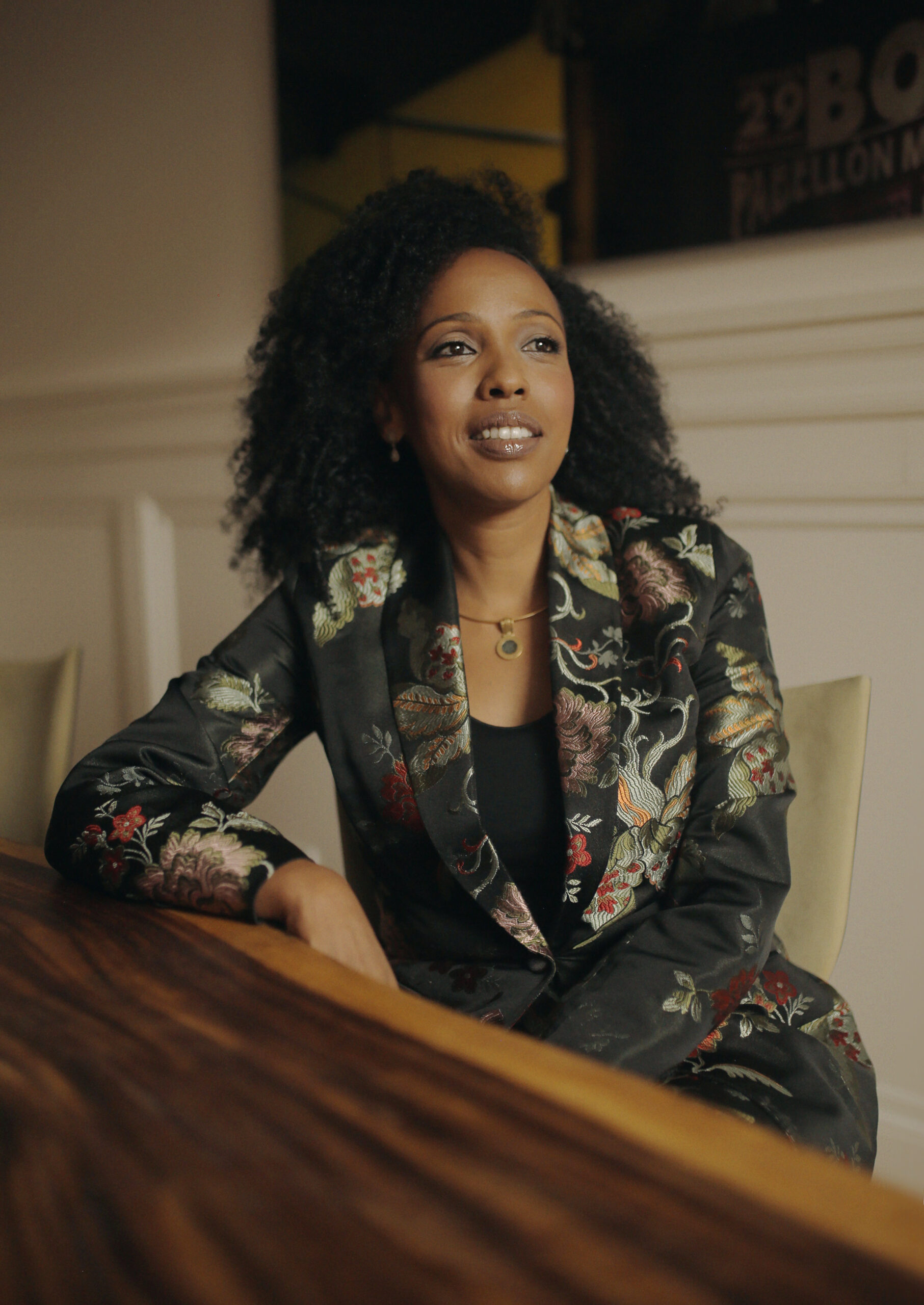
Sara Menker, CEO of Gro Intelligence, uses AI and agriculture data to forecast global food security risks and guide decision-makers.
When Sara Menker left Wall Street to launch Gro Intelligence in 2014, she was not chasing a trend. Instead, she was targeting one of the biggest blind spots in global markets.
At the time, agriculture — a $10 trillion industry — lacked real-time intelligence. Financial markets had advanced tools. However, food systems relied on delayed reports and fragmented datasets. As a result, decisions were often reactive rather than predictive.
Menker had seen this firsthand at Morgan Stanley. Markets moved sharply on shocks like droughts or export bans. Yet the signals were already visible. They were simply disconnected.
That gap became her opportunity.
Building the Data Backbone of Food Markets
To begin with, Gro Intelligence aggregates vast datasets. These include satellite imagery, weather patterns, crop yields, and trade flows. It also integrates inputs from sources like NASA Earth data and FAO statistics.
Then, the platform applies machine learning. This allows users to detect risks early and act ahead of the market.
The ambition is clear. Menker is building the agricultural equivalent of a Bloomberg Terminal.
Initially, that idea seemed unconventional. Venture capital was focused on fintech and consumer apps. Agriculture appeared too complex and slow. Nevertheless, Menker saw a deeper shift coming.
Food security was becoming geopolitical.
From Overlooked Sector to Strategic Asset
Over time, that thesis proved correct. Food systems are now central to global stability. Climate shocks, supply chain disruptions, and trade tensions have amplified the risks.
For instance, during the Russia-Ukraine grain disruption, wheat markets surged. However, the underlying vulnerabilities were already present in the data.
Those with advanced analytics responded faster. Others followed the crisis.
Consequently, Gro’s platform gained traction. Its clients now include hedge funds, governments, and multinational agribusinesses. Each uses the data differently. Still, the goal is the same: reduce uncertainty.
Menker’s work earned her recognition on TIME’s 100 Most Influential People. Yet the real achievement lies in building trust in predictive systems.
Why the Business Model Matters
Equally important is how Gro was built. Menker chose a venture-backed structure. The company has raised over $100 million from firms like TPG Growth and Intel Capital.
This decision was strategic. Data infrastructure is expensive. It requires engineers, computing power, and constant refinement.
A nonprofit model would not scale at this level. Instead, commercial backing allowed Gro to compete globally.
Therefore, the lesson is clear: mission needs capital discipline.
Operating at the Intersection of Systems
At the same time, Menker operates across multiple domains. Agriculture touches climate science, trade policy, and macroeconomics. It also affects national security.
Because of this, Gro’s insights are used in global forums. Institutions like the World Economic Forum and the African Development Bank increasingly rely on such data.
Moreover, her ability to translate across sectors is a competitive advantage. She connects technical insight with strategic decisions.
That is rare.
The Risks and the Moat
However, the business is not without challenges. Agricultural data remains inconsistent, especially in emerging markets. In addition, climate models carry uncertainty.
Meanwhile, large technology firms could enter the space. They have greater computing resources and AI capabilities.
So, where is Gro’s edge?
It lies in integration. The company stitches together fragmented datasets into a single system. This process is complex and time-consuming. As a result, it creates a barrier to entry.
Still, that advantage must evolve. Technology moves quickly. Data advantages do not last forever.
The Bigger Bet: Predictive Power
Looking ahead, the stakes are rising. By 2050, the global population may reach 10 billion. At the same time, water scarcity and climate volatility will intensify.
Therefore, food systems will face increasing pressure.
In this environment, data becomes power. Countries that understand their food systems in detail can act early. They can diversify imports, manage risks, and stabilize prices.
On the other hand, those without insight will react too late.
Menker understood this shift early. She positioned Gro Intelligence not as a typical startup, but as infrastructure for a volatile world.
What Founders Should Take Away
Ultimately, her journey highlights a different kind of entrepreneurship.
First, she identified a systemic gap, not a surface problem.
Second, she built infrastructure, not just tools.
Third, she aligned mission with a scalable business model.
Finally, she moved before the market fully understood the risk.
In contrast to many startups, Gro Intelligence does not chase trends. Instead, it anticipates them.
A New Kind of Global Company
Food is no longer just an agricultural issue. It sits at the intersection of climate, capital, and geopolitics.
Because of that, companies like Gro Intelligence are becoming essential. They provide clarity in systems defined by uncertainty.
Sara Menker did not just build a company. She built visibility into one of the world’s most critical blind spots.
And increasingly, that visibility is what separates stability from crisis.








Stanbic Women Finance Surge in Kenya

Stanbic Bank East Africa’s AI Risk Transformation

Joe Sang: Inside Kenya’s Fuel System Breakdown


-

 Economy & Policy7 days ago
Rwanda Tops 2026 Investment Attractiveness Index
-

 Commercial Banking6 days ago
Kenya Banks Competitive Growth Insights 2026
-

 Commercial Banking3 days ago
Standard Bank Growth Plan Faces Africa Risks
-

 Top Banks6 days ago
Top 10 Capitalized Banks in East Africa 2025
-
 Boardroom Leadership5 days ago
East Africa Women CEOs 2025 Rankings
-

 Entrepreneur5 days ago
East Africa’s Richest 2025: Top 10 Revealed
-
 Commercial Banking7 days ago
Standard Bank Ethiopia: Measured Entry Strategy
-

 Insurance6 days ago
Top 10 Capitalized Insurers in East Africa 2025