Energy
Uganda Oil 2026: Pipeline, Reserves, Investor Risks
The EACOP pipeline
will transport up to 216,000 bpd from western Uganda to Tanzania’s port of Tanga. Its financing mix, dominated by Chinese and Gulf lenders, highlights shifting global capital flows.

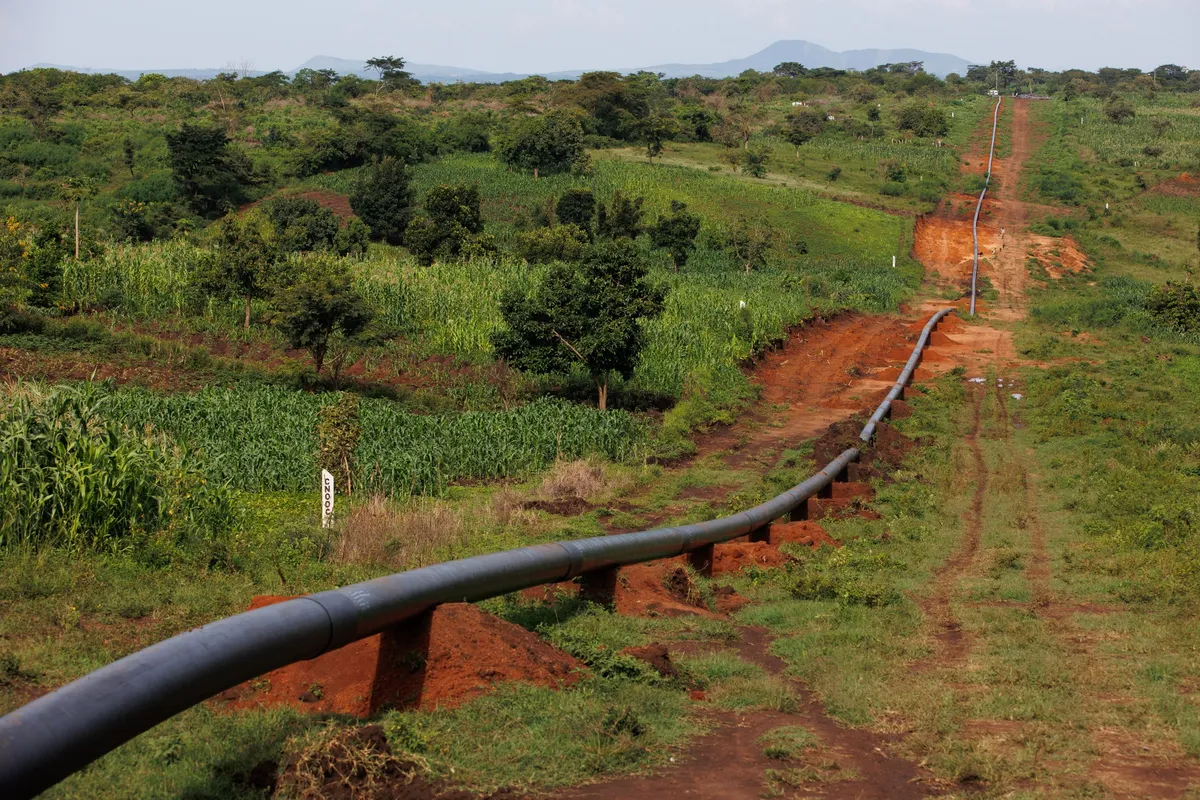
Uganda’s 6.5B-barrel oil, EACOP pipeline, and financing risks shape 2026 investment strategy. Investors weigh returns vs governance.
Uganda Oil 2026: Frontier Market with High Stakes
KAMPALA — With commercial crude output targeted for 2026, Uganda oil 2026 is drawing global attention from energy funds, commercial banks and sovereign wealth investors. The landlocked East African nation sits atop the Albertine Graben, a basin estimated to contain around 6.5 billion barrels of oil, of which approximately 1.4–1.65 billion barrels are technically recoverable — figures that rank among Africa’s largest undeveloped crude reserves and make the country a standout in frontier energy markets.
Major international players are already committed to the upstream phase. France’s TotalEnergies is leading development of the Tilenga field, while China’s CNOOC is advancing the Kingfisher field. Both projects are structured in partnership with the Uganda National Oil Company, reflecting a hybrid model of multinational and state investment. At peak, the combined output from Tilenga and Kingfisher is expected to reach 200,000–230,000 barrels per day (bpd), according to engineering studies.
For banks and energy funds, these volumes matter because they anchor upstream cash flow forecasts and influence how financiers structure project finance, reserve‑based lending and share risk across debt tranches.
EACOP Pipeline: Export Pathway or Bottleneck?
Nothing about Uganda oil 2026 is tradeable without a route to world markets — and in Uganda’s case that route is the East African Crude Oil Pipeline (EACOP). Expected to stretch 1,443 kilometers from western Uganda to the Tanzanian port of Tanga, EACOP is engineered to carry up to 216,000 bpd of crude. The design includes heated segments to address the “waxy” nature of Uganda’s oil, a technical complexity that drives cost and operational planning.
EACOP has become a geopolitically symbolic infrastructure project. Western banks and insurers, under pressure from climate and environmental risk mandates, have broadly stepped back from underwriting the pipeline. As Reuters reported, stalled Western capital commitments have pushed Uganda and its partners to seek finance instead from Chinese export credit agencies and Gulf sovereign lenders, reshaping the balance of risk and influence in East African energy corridors.
For sovereign wealth funds and international lenders, EACOP exemplifies how infrastructure risk and geopolitical capital flows can materially alter project pricing and expected returns.
Fiscal Returns: Oil Revenues and Growth Prospects
Industry analysts and multilateral institutions see significant macroeconomic upside if production and exports proceed smoothly. A World Bank analysis estimates that peak production could generate more than $5 billion annually in government revenue, a sum that would dwarf Uganda’s current export earnings from coffee, gold, and tourism combined. Revenues are expected to be collected through a combination of royalties, taxes, and equity stakes held via the Uganda National Oil Company, providing both sovereign cash flow and project co-investment returns.
Downstream, Uganda is building a 60,000 bpd refinery at Kabaale, intended to supply domestic and regional fuel demand. According to government energy briefs, the refinery not only captures additional value from crude processing but also reduces import dependency, stabilizes local fuel prices, and encourages private-sector investment in logistics and distribution.
Governance Risk and Investor Caution
While the resource potential is substantial, analysts caution that governance and regulatory risks remain critical factors for investors. Uganda’s petroleum sector has been marked by delayed legislation, compensation disputes, and complex stakeholder management along the EACOP route. International investors have also flagged environmental and social governance (ESG) concerns, noting that pipeline construction traverses ecologically sensitive zones, which has led to legal and reputational risks for financiers.
Political stability plays a complementary role in sovereign risk assessment. Western governments have largely tempered criticism of President Yoweri Museveni’s administration, focusing on strategic energy interests while refraining from imposing punitive financial measures. Analysts say this selective engagement reflects the influence of Uganda’s energy potential on regional geopolitics and explains why alternative capital, particularly from China and Gulf states, has filled the void left by Western financiers.
Investment Takeaways: Capital, Risk, and Returns
For global investors and commercial banks, Uganda oil 2026 presents both opportunity and complexity:
- Macro scale: Recoverable reserves and projected output offer significant potential for revenue and corporate returns.
- Infrastructure dependency: EACOP pipeline execution is central to unlocking cash flow. Any delays or cost overruns could materially affect project valuation.
- Financing structure: With Western capital largely absent, reliance on Chinese, Gulf, and African lenders introduces unique risk-sharing dynamics.
- Governance and ESG: Environmental disputes, legal challenges, and community compensation issues can influence political and operational risk ratings.
Sovereign wealth funds and private equity investors are modeling scenarios where first oil and full pipeline throughput occur under current timelines, but they also run sensitivity analyses for delays of 12–24 months, which could reduce internal rates of return or increase funding costs.
Uganda Crude Reserves: Regional Significance
Uganda’s positioning within Africa is increasingly relevant to regional energy trade. Neighboring Kenya and Tanzania stand to benefit from refining, transport, and logistics spillovers. The Ugandan government projects that local content requirements could channel up to 30% of project spending into Ugandan companies, boosting employment and local supply chains. However, domestic capacity constraints and high capital intensity mean much of the work remains in foreign hands.
Bottom Line: Frontier Risk Meets Reward
Uganda oil 2026 encapsulates the frontier market dichotomy: massive resource potential paired with infrastructure, governance, and geopolitical risk. For investors, the calculus is clear — gains could be transformative if production and export infrastructure come online as planned, but risk-adjusted returns depend on disciplined project execution, careful capital structuring, and attention to ESG and political developments.
The oil sector is expected to significantly influence Uganda’s GDP, fiscal balance, and energy export profile over the next decade. As first oil approaches, lenders and investors will watch closely how Tilenga, Kingfisher, and EACOP perform in real-world conditions, making Uganda a bellwether for frontier energy investments in Africa.
Keywords embedded: Uganda oil 2026, EACOP pipeline, Uganda crude reserves, Uganda energy investment

Energy
Uganda Oil and Aid Economics in 2026
Uganda’s economic model is evolving as first crude exports loom, with oil projected to generate $400 million annually. Analysts caution that governance, social safeguards, and security expenditure will determine investment returns in the East African nation.

Investors assess Uganda’s aid, peacekeeping revenue, defence spending, and oil income in USD and UGX as first crude nears in 2026.
Kampala, Feb 2026 — As Uganda approaches first commercial oil exports later this year, investors are reassessing the country’s economic model amid declining donor support, rising defence spending, and questions over how foreign funding has underwritten the state’s security apparatus.
For more than two decades, Uganda has been a cornerstone of U.S. security policy in East and Central Africa, a role that has translated into steady foreign inflows even as President Yoweri Museveni consolidated power.
According to figures published by USAFacts, the United States obligated roughly $673 million in total assistance to Uganda in fiscal year 2024, making it one of Washington’s largest aid recipients in the region.
Most of that assistance is classified as development and health funding, primarily channelled through programmes such as PEPFAR. Economists caution that headline aid figures obscure a broader system of indirect security financing that has supported Uganda’s fiscal position.
Uganda is among the largest troop contributors to the African Union Mission in Somalia and its successor operations. The U.S. State Department describes Kampala as “a reliable partner for the United States in promoting stability in the Horn of Africa and combating terrorism.”
Under AU and UN frameworks, troop-contributing countries receive reimbursements covering allowances, logistics, and equipment.
According to UN and AU budget data reviewed by Reuters, Uganda has received an estimated $2 billion in peacekeeping-related reimbursements since 2007, with the U.S. and EU among the largest funders.
“These payments are not labelled as military aid, but they materially offset Uganda’s defence costs,” said a Nairobi-based economist advising frontier-market funds. “It has allowed Kampala to sustain a large security apparatus without fully financing it from domestic revenues.”
Uganda’s approved defence and security budget for 2025/26 is about 4.2 trillion shillings ($1.1 billion), according to the Ministry of Finance. Analysts estimate that when peacekeeping reimbursements, equipment donations, and foreign training programmes are included, 35–40% of Uganda’s effective security expenditure is foreign-sourced.
The model is now under strain as traditional donor flows become less predictable. In late 2025, Uganda’s parliament approved a supplementary budget of 503 billion shillings ($140 million) to cushion the impact of delayed U.S. health funding (Reuters).
Finance Minister Matia Kasaija told lawmakers that direct external budget support would fall by more than 80% in 2026/27, forcing the government to rely more heavily on domestic taxation and oil-linked revenues.
Oil is expected to pivot Uganda’s economic profile. First crude production from the Albertine Rift Basin is targeted for late 2026, with recoverable reserves estimated at 6.5 billion barrels.
Central to the plan is the East African Crude Oil Pipeline (EACOP), a 1,443-kilometre export route to Tanzania’s Tanga port. TotalEnergies holds 62% of the project, with CNOOC and Uganda and Tanzania’s national oil companies holding the rest.
Government projections show oil revenues could eventually exceed $400 million annually, easing budget pressure as donor support declines. Execution risks and social grievances remain a focus for investors: Human Rights Watch has documented compensation delays for displaced households, and the United Nations has urged stronger safeguards (Reuters).
To provide context for investors, the following table summarises key financing flows for Uganda in 2025/26:
| Funding Source | Amount (UGX) | Amount (USD) | Notes |
|---|---|---|---|
| U.S. Aid (Total) | 2.5 trillion UGX | $673 million | Primarily development & health (PEPFAR) |
| Defence & Security Budget | 4.2 trillion UGX | $1.1 billion | Includes salaries, operations, procurement |
| Peacekeeping Reimbursements | 7.6 trillion UGX | $2.0 billion | From AU/UN missions in Somalia |
| Oil Revenue Projection | 1.5 trillion UGX | $400 million | Expected post-production (2026/27) |
The table highlights the interplay between aid, peacekeeping, defence, and oil revenues, showing that nearly half of Uganda’s security and development financing comes from foreign sources, while oil is poised to become the next fiscal pillar.
Scholars Rita Abrahamsen and Gerald Bareebe argue that Uganda’s strategic value to Western security policy has historically muted donor pressure. Writing in World Politics Review, they say foreign assistance has functioned as a political stabiliser as much as a development tool.
“Museveni has positioned Uganda as indispensable to counter-terrorism efforts,” Abrahamsen wrote. “That usefulness has translated into sustained external support.”
For investors, the 2026 question is whether oil revenues will replace aid as a stabilising force, or entrench a security-first political economy with higher long-term risk premiums.
“Uganda is moving from an aid-anchored fiscal model to an oil-anchored one,” said a portfolio manager at a London-based emerging markets fund. “The returns could be significant, but only if revenue governance improves and security spending does not crowd out productive investment.”
As first oil nears, markets are no longer asking whether Uganda matters economically. They are asking how money flows — from donors, peacekeeping missions, and oil exports — interact to shape risk, stability, and returns in one of East Africa’s most strategically placed economies.


Stanbic Women Finance Surge in Kenya

Stanbic Bank East Africa’s AI Risk Transformation

Joe Sang: Inside Kenya’s Fuel System Breakdown


-

 Economy & Policy7 days ago
Rwanda Tops 2026 Investment Attractiveness Index
-
 Commercial Banking6 days ago
Kenya Banks Competitive Growth Insights 2026
-

 Commercial Banking3 days ago
Standard Bank Growth Plan Faces Africa Risks
-

 Top Banks6 days ago
Top 10 Capitalized Banks in East Africa 2025
-

 Boardroom Leadership5 days ago
East Africa Women CEOs 2025 Rankings
-

 Entrepreneur5 days ago
East Africa’s Richest 2025: Top 10 Revealed
-

 Commercial Banking7 days ago
Standard Bank Ethiopia: Measured Entry Strategy
-

 Insurance6 days ago
Top 10 Capitalized Insurers in East Africa 2025