
Banking & Finance
Kenya High Court Ruling on TechnoService vs Microsoft
On September 16, 2025, a Nairobi court ruled that affidavits from senior executives like Nderitu need not face cross-examination without exceptional grounds. This decision strengthens Microsoft’s defense in the ongoing case. Critics argue it tilts the scales against smaller Kenyan companies.


On Sept 16, 2025, Kenya’s High Court dismissed TechnoService’s bid to cross-examine ex-Microsoft boss Kendi Nderitu, shaping corporate justice in Africa.
Kenya High Court Ruling on TechnoService vs Microsoft Case Blocks Cross-Examination of Ex-Executive
Nairobi, 16 September 2025 — The Kenya High Court has dismissed a high-profile application by TechnoService Limited seeking to cross-examine former Microsoft East Africa Country Manager, Kendi Nderitu, in a long-running commercial dispute with Microsoft Corporation and its global affiliates. The judgment, delivered on Tuesday, signals yet another turning point in a case that has drawn significant attention within East Africa’s technology and legal ecosystems.
According to reporting by Kenyan Wall Street, the ruling effectively shuts down TechnoService’s efforts to directly question the former executive under oath.A Kenyan court last year October, declined to intervene in arbitration proceedings that were ongoing between the two warring corporates, arguing that courts must respect the parties’ mutual decision to settle disputes via arbitration. The local firm had argued that cross-examination was necessary to test the credibility of Nderitu’s sworn affidavit, which forms part of Microsoft’s defense.
A Long-Running Legal Battle
The dispute traces back to contracts signed between TechnoService and Microsoft that reportedly broke down over alleged breaches of distribution and licensing agreements. While court filings remain largely sealed, TechnoService claims it suffered significant financial losses due to Microsoft’s alleged failure to honor parts of the deal.
Legal scholars note that corporate battles between local firms and multinational tech giants are not new. A World Bank study on digital markets emphasizes how power imbalances often play out in emerging economies, where local firms struggle to match the legal and financial muscle of global corporations.
By attempting to cross-examine Nderitu, TechnoService was effectively testing the judiciary’s willingness to give smaller firms more latitude when challenging international corporations in Kenyan courts.
Why the Court Said No
In her ruling, the presiding High Court judge stressed that affidavits filed by senior executives can be relied upon without subjecting them to cross-examination unless “exceptional circumstances” are proven. The court determined that TechnoService had not demonstrated such circumstances.
Legal analysts interpret this as a reaffirmation of procedural safeguards in Kenya’s judicial system. As Kenya Law explains, affidavits are binding unless material contradictions are shown — a high bar for litigants.
“This decision underscores the balance courts must strike between fair trial rights and efficiency in commercial litigation,” said Nairobi-based advocate Caroline Mwangi in an interview. “If every affidavit from corporate executives required cross-examination, cases involving multinational corporations would grind to a halt.”
Broader Implications for Tech Governance
The ruling resonates beyond the courtroom. With Nairobi increasingly seen as Africa’s Silicon Savannah, disputes between global tech firms and local partners have implications for investment flows, competition policy, and innovation ecosystems.
Multinationals such as Microsoft, Google, and Amazon continue to expand aggressively across Africa, investing in data centers, AI research, and cloud services. According to Bloomberg, Africa’s digital economy is projected to grow to $180 billion by 2025, up from $115 billion in 2020. Legal certainty, therefore, becomes central to attracting and sustaining this investment.
By rejecting TechnoService’s request, the High Court may reassure foreign investors that Kenya’s judiciary will guard against what they may perceive as “delay tactics.” On the other hand, critics argue that this undermines smaller local firms who already face steep barriers when negotiating contracts with global corporations.
The Question of Judicial Independence
The case also highlights the ongoing debate over judicial independence in Kenya. Although the Constitution of Kenya guarantees an impartial judiciary, local firms often voice concerns that multinational corporations wield disproportionate influence due to their economic clout.
Groups such as Transparency International have warned that corporate litigation involving powerful global players can test the robustness of Kenya’s legal safeguards. For TechnoService, the ruling could reinforce the perception that smaller companies rarely prevail when facing global giants.
What Happens Next?
TechnoService’s lawyers have hinted at appealing the decision to Kenya’s Court of Appeal, arguing that the refusal undermines their client’s right to a fair hearing. Should the case proceed, it will likely be closely monitored by legal experts, investors, and policymakers both locally and internationally.
Meanwhile, Microsoft maintains its stance that it has acted lawfully and in accordance with contractual obligations. The company has not issued fresh public statements on the matter, though past filings suggest it views the litigation as “frivolous and without merit.”
Interpretative Lens: Why This Matters
From an interpretative perspective, this ruling is more than just a procedural outcome in a commercial case. It reflects the broader tension between global corporate power and local economic sovereignty.
If Kenyan courts consistently side with global corporations, local innovators may become hesitant to partner with them for fear of legal vulnerability. Conversely, if courts lean too heavily toward local firms, multinational players may scale back their investment, slowing Kenya’s ambition to be a continental digital hub.
The High Court ruling, therefore, is a microcosm of the delicate balancing act facing many African economies as they integrate into global digital supply chains.
Conclusion
On 16 September 2025, the Kenya High Court ruling on TechnoService vs Microsoft case marked another twist in a dispute that reflects the wider dynamics of globalization, judicial independence, and the power struggles defining Africa’s digital transformation.
Whether through appeals, settlements, or policy reforms, the eventual resolution will help determine not just the fate of TechnoService, but also the confidence of local firms navigating the increasingly complex world of global technology partnerships.
Commercial Banking
Equity Green Finance Africa Leads Growth
The bank’s mobile and branch network ensures deep rural penetration. It reaches areas where formal banking is scarce.
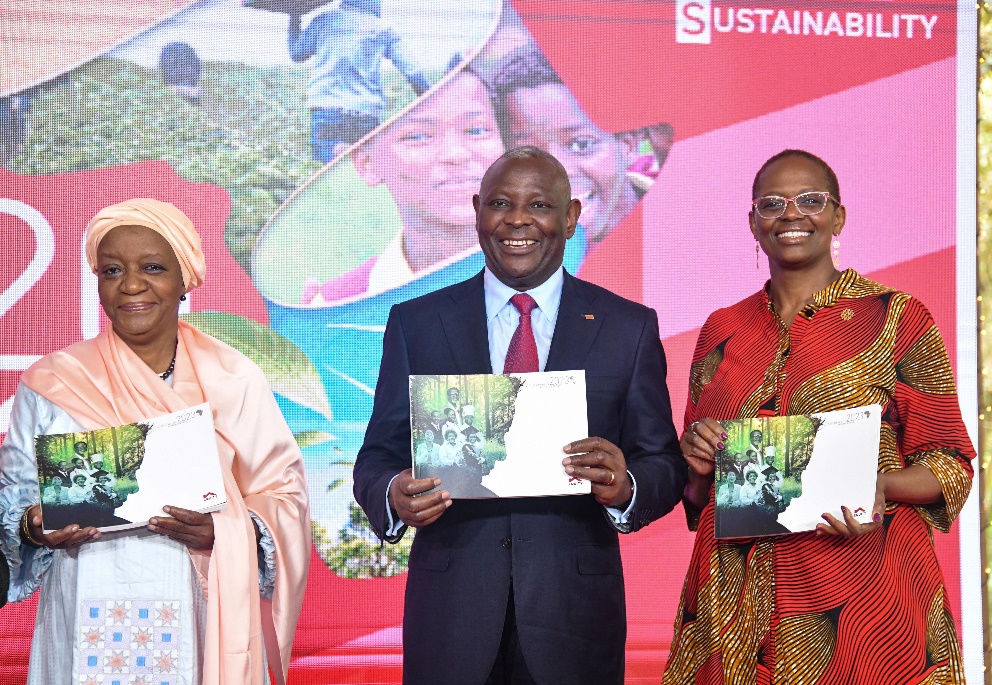
Equity green finance Africa drives mass-market climate solutions, funding solar, agriculture, and MSMEs for sustainable development.
Equity Green Finance Africa: Scaling Climate Impact at the Base
Equity Group Holdings is leading the charge in Equity green finance Africa, placing climate-smart financing directly into the hands of smallholder farmers, micro, small and medium enterprises (MSMEs), and households. As global finance increasingly tilts toward sustainability, the bank has deliberately focused on mass-market climate inclusion, thereby delivering measurable economic and environmental outcomes at scale.
At the center of this strategy sits the Equity Group Foundation, which channels blended finance and donor capital into solar, biogas, irrigation, and climate-smart agriculture solutions. Furthermore, the 2025 Integrated Annual Report indicates that the group has committed over $500 million (≈ KSh 64.5 billion) toward climate-related financing, reaching millions of smallholder farmers and MSMEs.
Image suggestion: Smallholder farmers using solar irrigation
Alt text: “Equity green finance Africa solar irrigation impact”
Scaling Climate Finance at the Base of the Economy
In contrast to peers such as Stanbic Bank Kenya, which prioritize structured ESG corporate lending, Equity has chosen a different path. Instead, the bank deploys small-ticket, high-volume financing, enabling rapid adoption of green technologies among underserved communities.
To illustrate, the bank’s 2025 initiatives include:
- Solar home systems and off-grid energy financing
- Biogas and clean cooking solutions for households
- Climate-smart agriculture inputs such as irrigation kits and drought-resistant seeds
Additionally, partnerships with World Bank financial inclusion programs have expanded outreach across rural economies. As a result, climate resilience is embedded directly into livelihoods, rather than remaining a top-down policy ambition.
Real-Life Impact Across Communities
Across regions, the results are increasingly visible. In western Kenya, for instance, a group of 100 smallholder maize farmers accessed solar-powered irrigation systems financed through Equity-backed programs. Consequently, their yields rose by approximately 30% within a single season.
At the same time, micro-enterprises in Kisumu adopting biogas systems have reported energy cost reductions of up to 40%, while also lowering dependence on charcoal. Taken together, these outcomes highlight how Equity’s climate inclusion model converts capital into measurable impact, rather than abstract sustainability commitments.
Image suggestion: Biogas-powered SME in Kisumu
Alt text: “Equity green finance Africa clean energy SME”
Distribution as a Strategic Advantage
Crucially, Equity’s strength lies not in complex product design but in distribution scale. With one of the largest customer bases in Africa, the bank leverages multiple channels to expand access efficiently.
For example:
- Mobile and agency banking platforms extend reach into remote regions
- A customer base exceeding 14 million in Kenya supports rapid rollout
- Community-based engagement strengthens grassroots adoption
Because of this, the bank scales Equity green finance Africa far more effectively than competitors. In contrast to traditional banking models, it penetrates informal economies where collateral is limited but demand remains strong.
A Different Approach to ESG
Rather than focusing on headline ESG transactions, Equity has built a model centered on inclusion. Specifically, its approach prioritizes climate inclusion at scale, livelihood-linked financing, and economic resilience in underserved communities.
Moreover, this framework aligns closely with global financial inclusion standards, which emphasize access as the primary constraint in emerging markets. Consequently, the bank demonstrates that sustainability can be achieved through breadth of access, not just financial structuring.
Strategic Trade-Offs and Market Position
Naturally, this approach involves trade-offs. On one hand, Equity delivers broad-based impact and deep market penetration. On the other, it generates fewer high-profile ESG transactions compared to peers.
For comparison:
- Stanbic Bank Kenya focuses on structured ESG and sustainability-linked loans
- KCB Group emphasizes large-scale infrastructure financing
- Absa Bank Kenya drives ESG product innovation
Even so, Equity’s model stands apart. By prioritizing scale over sophistication, it positions itself as East Africa’s largest climate inclusion engine.
Global Context and Future Outlook
Across emerging markets, demand for climate finance continues to rise. At the same time, investors are increasingly seeking models that combine financial returns with measurable impact.
In this context, Equity’s approach offers a compelling blueprint. Not only does it attract development finance, but it also appeals to private capital focused on sustainability outcomes. Furthermore, its scalability makes it adaptable across African markets where smallholder farmers and MSMEs dominate economic activity.
Conclusion: Redefining Green Finance
Ultimately, Equity Group Holdings is reshaping the meaning of green finance in Africa. By deploying over $500 million into solar, biogas, and climate-smart agriculture, the bank is embedding sustainability directly into everyday economic activity.
While competitors focus on structuring large ESG deals, Equity is transforming livelihoods at scale. Therefore, the future of Equity green finance Africa may not lie in financial complexity but in access, distribution, and measurable real-world impact.
Commercial Banking
Stanbic vs Rivals in Kenya’s Green Finance Race
KCB is financing large green infrastructure and corporate projects. Its strength lies in balance sheet capacity.
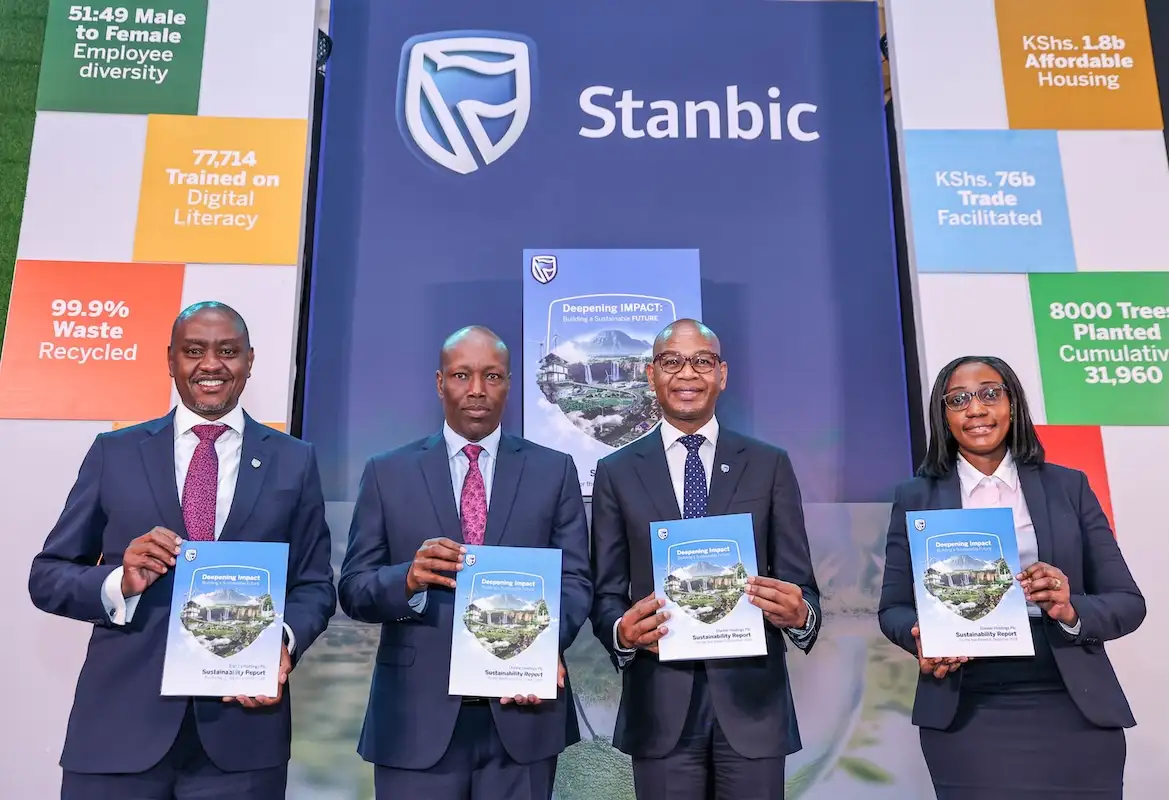
Stanbic, Equity, KCB and Absa are racing to dominate green finance in Kenya. Here’s how their ESG strategies compare in 2025.
Kenya’s Green Finance Battle: Who Is Really Leading?
Kenya’s banking sector is entering a decisive phase in climate finance, with Stanbic Bank Kenya, Equity Group Holdings, KCB Group and Absa Bank Kenya all scaling environmental, social and governance (ESG) lending.
But beneath the shared narrative of sustainability lies a clear divergence in strategy, execution and scale.
Stanbic: Structured ESG as a Core Banking Model
Stanbic has taken perhaps the most institutionally embedded approach to green finance.
Its model is defined by:
- ESG screening integrated into all large loans
- Active structuring of sustainability-linked deals
- Target to green ~10% of its loan book
The bank’s participation in a KSh 15 billion (≈ $116 million) sustainability-linked loan for Safaricom illustrates its edge—not just lending, but structuring performance-based ESG financing.
Crucially, Stanbic is leveraging its parent, Standard Bank Group, to align with global climate finance standards—giving it stronger access to international capital.
👉 Positioning: Most sophisticated ESG structurer in Kenya
Equity Group: Scale and Climate Inclusion at the Base
Equity Group Holdings is taking a different route—focusing on scale and mass-market climate financing.
Through its foundation and partnerships, Equity has:
- Committed over $500 million toward climate finance initiatives
- Financed clean energy solutions such as solar kits and biogas
- Targeted millions of smallholder farmers and MSMEs
Its model is less about complex ESG instruments and more about broad-based climate inclusion.
Equity’s strength lies in distribution—its vast customer base allows it to push green products deep into rural and informal markets.
👉 Positioning: Largest climate inclusion engine
KCB Group: Corporate Green Deals and Balance Sheet Strength
KCB Group sits somewhere between Stanbic and Equity.
Its strategy focuses on:
- Large-scale corporate and infrastructure financing
- Green project funding (energy, manufacturing, agribusiness)
- Regional expansion of ESG lending
KCB has committed billions toward sustainable finance and is actively aligning with global frameworks such as the UN Principles for Responsible Banking.
However, its ESG model remains more portfolio-driven than structurally embedded, compared to Stanbic.
👉 Positioning: Corporate-scale green financier
Absa Kenya: ESG Integration and Product Innovation
Absa Bank Kenya is focusing on product innovation and internal ESG alignment.
Key initiatives include:
- Green bonds and sustainable finance products
- Internal carbon reduction strategies
- SME-focused green financing
Absa has also been active in advisory and structuring roles, though at a smaller scale compared to Stanbic.
Its strength lies in financial engineering and ESG product design, but it is still building scale.
👉 Positioning: Emerging ESG product innovator
Where the Real Differences Lie
1. Depth vs Breadth
- Stanbic: Deep, structured ESG integration
- Equity: Wide, mass-market reach
- KCB: Large corporate deals
- Absa: Product innovation
2. Type of Green Finance
- Stanbic: Sustainability-linked loans, structured ESG deals
- Equity: Solar, agriculture, MSME financing
- KCB: Infrastructure and corporate green lending
- Absa: Green bonds, advisory, niche products
3. Access to Global Capital
- Stanbic: Strong (via Standard Bank Group)
- Equity: Strong (DFI partnerships)
- KCB: Moderate to strong
- Absa: Growing
The Strategic Divide: Two Competing Models
Kenya’s green finance market is effectively splitting into two dominant models:
🔹 1. Institutional ESG Finance (Stanbic Model)
- Structured deals
- Performance-linked lending
- Global capital alignment
🔹 2. Mass Climate Inclusion (Equity Model)
- High-volume lending
- Rural and SME penetration
- Development-driven approach
KCB and Absa operate in hybrid territory between these poles.
Who Is Winning?
The answer depends on the metric:
- Most advanced ESG structuring: Stanbic
- Biggest reach and impact: Equity
- Largest corporate deals: KCB
- Most innovative products: Absa
But in terms of future positioning, Stanbic’s model may offer the strongest leverage.
Why?
Because global capital is increasingly flowing toward:
- Measurable ESG outcomes
- Structured sustainability-linked instruments
- Banks with integrated climate risk frameworks
The Bigger Picture: A Market Entering Maturity
Kenya is one of Africa’s most advanced green finance markets, supported by:
- Over 80% renewable energy generation
- Strong regulatory backing
- Growing investor interest in ESG assets
This is pushing banks to move beyond narrative into execution and measurable impact.
Conclusion: A Defining Decade for Green Banking
The competition between Stanbic, Equity, KCB and Absa is not just about market share—it is about defining the future model of African banking.
- Will it be structured, globally aligned ESG finance?
- Or mass-market climate inclusion at scale?
For now, Kenya is hosting both experiments in real time.
And for investors watching closely, one thing is clear:
green finance is no longer optional—it is the next battleground for banking dominance in Africa.
Commercial Banking
Stanbic Green Finance Push Accelerates
Stanbic is targeting at least 10% of its portfolio as green. The shift reflects a structural change in lending strategy.
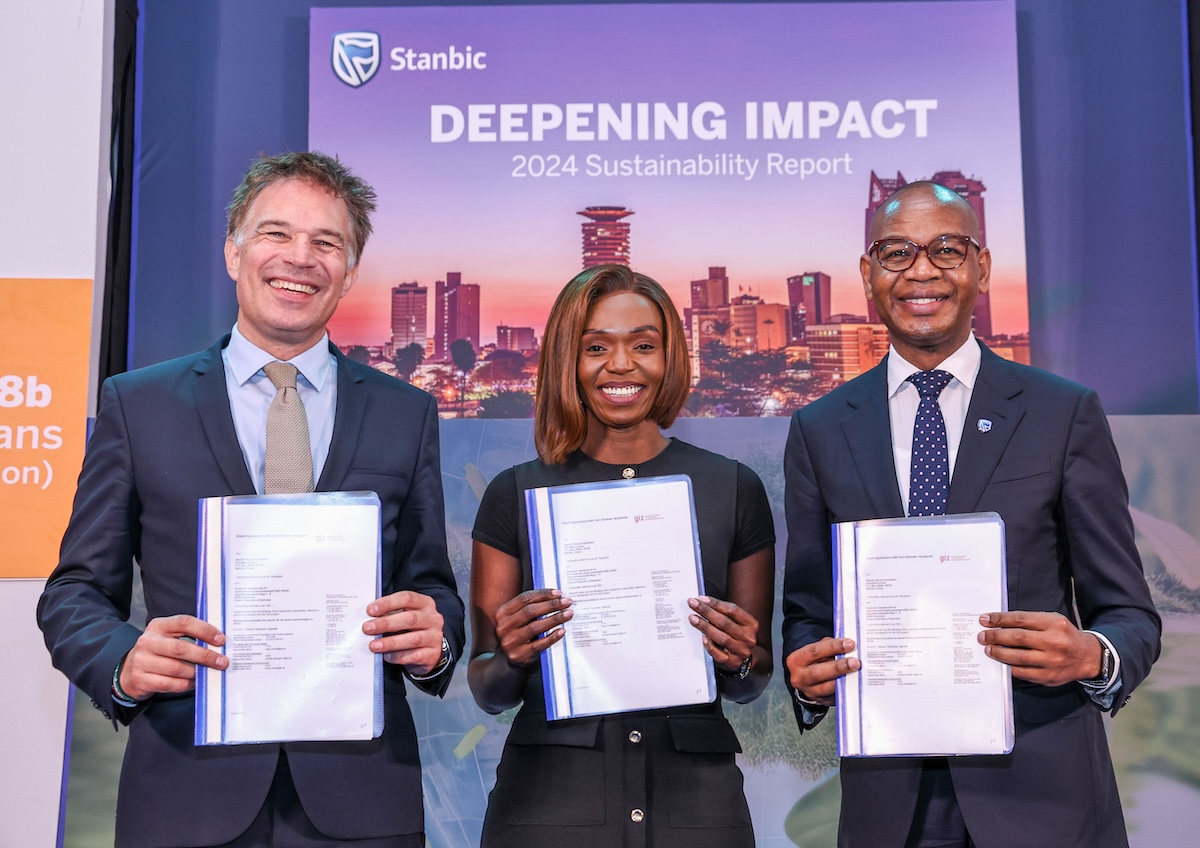
Stanbic Bank Kenya scales green finance in 2025, expanding solar loans, ESG deals and climate-linked funding to back Kenya’s transition.
Stanbic’s Green Finance Strategy Enters Scale Phase
Stanbic Bank Kenya is accelerating its transition into a sustainability-led lender, scaling climate finance across its portfolio in 2025 as it positions itself at the centre of Kenya’s green economic shift.
Building on momentum from its latest sustainability disclosures, the bank has moved beyond policy commitments into active capital deployment across renewable energy, green real estate and sustainability-linked corporate financing.
This is no longer ESG as narrative—this is ESG as balance sheet strategy.
2025: From Commitments to Capital
Stanbic’s green finance activity in 2025 reflects a clear acceleration phase.
The bank expanded its renewable energy lending, issuing over KSh 500 million (≈ $3.9 million) in solar financing, while deepening participation in sustainability-linked transactions tied to measurable environmental outcomes, as detailed in recent sector reporting.
At the corporate level, Stanbic also participated in a KSh 15 billion (≈ $116 million) sustainability-linked loan for Safaricom, one of Kenya’s largest ESG-linked financings to date, where pricing is tied directly to environmental performance targets.
This signals a structural shift: capital is increasingly being priced against sustainability metrics.
Leadership Signal: ESG as Core Strategy
Stanbic’s leadership has been explicit about the shift.
Speaking in recent sustainability updates, Joshua Oigara emphasized that “sustainability is embedded in how we allocate capital and manage risk,” reinforcing the bank’s transition toward climate-aligned lending.
This marks a departure from traditional banking models, where environmental considerations were often peripheral. At Stanbic, ESG is now integrated into:
- Sector selection
- Credit structuring
- Risk assessment frameworks
Every major deal is increasingly screened through an environmental and social lens.
Green Portfolio Expansion and Targets
Stanbic’s green portfolio is steadily expanding, with sustainability-linked lending now accounting for a growing share of its overall loan book.
The bank is targeting at least 10% of its portfolio to be green or sustainability-linked, building on an estimated 8% base achieved by 2024, according to industry disclosures and sustainability reporting.
Key sectors driving this growth include:
- Renewable energy (solar and distributed power systems)
- Sustainable agriculture (climate-resilient inputs and irrigation)
- Green real estate (energy-efficient buildings)
- E-mobility (low-emission transport financing)
This sectoral diversification reflects a deliberate alignment with Kenya’s climate priorities.
Financing Kenya’s Energy Transition
Kenya already generates more than 80% of its electricity from renewable sources, making it one of Africa’s clean energy leaders.
Stanbic is positioning itself as a key financial intermediary in scaling this transition further, particularly in distributed solar and commercial energy solutions.
Through targeted solar lending and project financing, the bank is supporting:
- SMEs transitioning to off-grid solar
- Commercial and industrial energy users
- Real estate developers integrating green technologies
Internally, the bank is also advancing sustainability, including solar adoption across its own operations, reinforcing credibility with ESG-focused investors.
Structuring the Future: ESG-Linked Finance
Beyond direct lending, Stanbic is playing an increasingly important role in structuring ESG-linked financial instruments.
The Safaricom sustainability-linked facility represents a broader trend where:
- Loan pricing is tied to emissions reductions
- Borrowers commit to measurable ESG targets
- Banks embed sustainability into deal structures
This model is gaining traction globally—and Stanbic is among the early movers in East Africa.
Competitive Advantage in a Crowded Market
Stanbic’s green finance strategy provides a clear differentiator in Kenya’s banking sector.
Three advantages stand out:
1. Integrated ESG Risk Framework
Unlike many competitors, Stanbic embeds climate risk directly into credit decision-making.
2. Deal Structuring Capability
The bank is active not just in lending, but in structuring complex sustainability-linked transactions.
3. Global Alignment
Through its parent, Standard Bank Group, Stanbic aligns with global ESG standards, enhancing its ability to attract international capital.
This positions the bank as a bridge between global climate finance and local economic opportunities.
The Global Capital Angle
Climate finance is rapidly becoming one of the most important capital flows into emerging markets.
With global investors increasingly allocating funds toward ESG-compliant assets, Stanbic’s positioning offers a strategic advantage:
- Access to development finance institutions
- Alignment with global climate frameworks
- Ability to intermediate large-scale green capital flows
In effect, the bank is not just financing projects—it is building a pipeline for international climate capital into Kenya.
Conclusion: Banking on the Green Transition
Stanbic Bank Kenya’s green finance push has entered a decisive phase in 2025.
With KSh 500 million ($3.9 million) already deployed in solar lending, active participation in $116 million ESG-linked deals, and a clear roadmap toward greening its loan book, the bank is transforming sustainability into a core business line.
For global investors and policymakers, the message is unmistakable:
Stanbic is positioning itself not just as a bank—but as a climate finance platform for East Africa.


Equity Green Finance Africa Leads Growth

Stanbic vs Rivals in Kenya’s Green Finance Race

Stanbic Green Finance Push Accelerates


-

 Commercial Banking6 days ago
Kenya Banks Competitive Growth Insights 2026
-

 Commercial Banking4 days ago
Standard Bank Growth Plan Faces Africa Risks
-

 Top Banks7 days ago
Top 10 Capitalized Banks in East Africa 2025
-

 Boardroom Leadership6 days ago
East Africa Women CEOs 2025 Rankings
-

 Insurance7 days ago
Top 10 Capitalized Insurers in East Africa 2025
-

 Entrepreneur5 days ago
East Africa’s Richest 2025: Top 10 Revealed
-

 Commercial Banking3 days ago
Kenya Capital Drive Faces Execution Test
-

 Fintech5 days ago
Top Capitalized Fintechs in East Africa 2025