
Banking & Finance
Tanzania Bans Dollar Use in Local Transactions
Tanzania’s currency directive sends ripples across East Africa, signaling a regional pushback against dollar dominance as officials call for stronger trust in local currencies.


Tanzania’s central bank bans foreign currency use in domestic transactions to protect the shilling, with exceptions for tourism and cross-border trade.
Dar es Salaam, Tanzania – June 2025
In a major move to reinforce monetary sovereignty, the Bank of Tanzania (BoT) has outlawed the use of foreign currencies in domestic pricing and payments. The policy—announced on Friday—now requires that all local transactions be conducted in Tanzanian shillings (TSh), with a few exceptions made for tourism and cross-border activities.
🏦 BoT Cracks Down on Dollar Use in Local Markets
“All payments and pricing of goods and services in the United Republic of Tanzania shall be in Tanzanian shillings,” declared BoT Governor Emmanuel Tutuba in the official release.
The directive targets businesses and individuals engaging in informal dollar-based transactions, especially in tourism-heavy regions like Zanzibar and Serengeti. It’s part of a wider strategy to stabilize the national currency, improve transparency, and curb monetary policy leakage.
“This measure is aimed at strengthening our currency and ensuring transparency in commercial activities,” said Governor Tutuba.
🧳 Tourists Allowed Exceptions—Under Strict Terms
Under the new policy, foreign visitors can still pay via international cards or digital wallets. However, cash payments must be made in Tanzanian shillings, with foreign currency first exchanged at licensed commercial banks or forex bureaus.
“This is not a ban on foreign money—it’s a call to respect the shilling,” said a BoT official. “Foreigners are welcome, but local transactions must reflect the law of the land.”
This policy shift is expected to affect Zanzibar’s hospitality sector, where up to 80% of revenue from high-end hotels and lodges comes from non-resident dollar payers.
💲 Dollarization Threatening Currency Confidence
According to Dr. Neema Lugangira, a senior economist at the University of Dar es Salaam, the trend of quoting goods and services in USD or EUR has undermined the Tanzanian shilling and complicated macroeconomic controls.
“Dollarization erodes confidence in our currency and complicates monetary policy,” she explained. “When businesses abandon the shilling, it sends a dangerous signal to investors and citizens alike.”
Sectors such as real estate, safaris, and luxury retail have been key drivers of this dual-currency environment.
📢 BoT Urges Public to Report Offenders
To enforce the directive, the BoT is calling on citizens to report violators to:
- The Financial Intelligence Unit (FIU)
- Local law enforcement
- The central bank directly via designated hotlines
“Compliance is not optional,” Tutuba emphasized. “This is a matter of national economic stability.”
The move aligns with broader efforts to enhance fiscal accountability and regulate the underground forex market.
📉 Currency Under Pressure, Reserves in Focus
Tanzania’s currency has been under stress, with the Tanzanian shilling depreciating from TSh 2,360/USD to TSh 2,470/USD over the past year. The central bank has made several market interventions to protect reserves and curb inflation.
This crackdown is seen as a strategic step to:
- Improve liquidity in the interbank market
- Reduce informal forex trading
- Reinforce confidence in the local unit
“[BoT] is clearly trying to prevent a deeper currency slide and anchor public expectations,” said a regional analyst with EAC Monetary Policy Forum.
🏨 Private Sector Adjusting to Currency Shift
Businesses in Zanzibar, Kilimanjaro, and Arusha—heavily reliant on dollar-paying tourists—are now recalibrating their operations.
“About 60% of our clients used to pay in dollars,” said Said Mussa, general manager of a beach resort in Nungwi. “We’re now updating our booking systems to reflect local currency. It’s a challenge, but we understand the bigger goal.”
Fintech firms are also reporting a surge in onboarding.
“We’ve had a 25% uptick in sign-ups from travel operators in just 48 hours,” said Janet Makame, East Africa Director at a regional payment platform.
🌍 Tanzania’s Lead May Inspire Regional Reforms
Experts say this policy could ripple across the East African Community (EAC), where countries like Kenya and Uganda face similar currency pressures and rising dollar preference in import and property markets.
“Tanzania is taking the lead on something many central banks in the region talk about but rarely enforce,” said an EAC policy analyst. “This may set a precedent for stricter forex regulations across East Africa.”
🔚 The Bottom Line: Defend the Shilling, Defend Sovereignty
At its core, Tanzania’s directive is more than economic—it’s a political statement on self-reliance and monetary identity. By outlawing informal foreign currency use, BoT aims to foster long-term stability even if short-term friction is inevitable.
“The value of a nation’s currency is the value of the nation itself,” said Governor Tutuba.
🔗 Related Content
Commercial Banking
KCB’s Government Banking Advantage
Alignment with fiscal policy allows KCB to anticipate market shifts. It often moves ahead of competitors in key sectors driven by government spending.

How KCB leverages state ties, public finance flows, and sovereign deals to dominate Kenya’s banking system.
The Government Bank Advantage: Inside Kenya Commercial Bank’s Strategic Grip on Public Finance
A Structural Edge No Rival Can Replicate
In Kenya’s competitive banking sector, most lenders fight for customers, deposits, and digital dominance. But Kenya Commercial Bank (KCB) operates on a different plane—one shaped by institutional power, state alignment, and privileged access to public finance flows.
Partially owned by the government, KCB occupies a unique position that competitors like Equity Group Holdings and Absa Bank Kenya cannot easily replicate.
This is not just an ownership detail—it is a strategic advantage embedded deep within Kenya’s financial architecture.
Dominance in Government Accounts and Public Flows
KCB’s most powerful advantage lies in its control over government-related financial flows.
Across ministries, state agencies, and public institutions, KCB has entrenched itself as a primary banking partner, handling:
- Salary accounts for public servants
- Revenue collection channels
- Operational accounts for government entities
These flows translate into something every bank covets: stable, low-cost deposits.
Unlike retail deposits—which can be volatile and price-sensitive—government-linked funds are:
- Predictable
- Large-scale
- Structurally sticky
👉 The implication is profound:
KCB enjoys a liquidity advantage that lowers its cost of funds and enhances profitability.
Preferred Position in Sovereign-Linked Lending
Beyond deposits, KCB plays a central role in financing the state itself.
The bank is frequently involved in:
- Government bond participation
- Infrastructure financing
- Syndicated loans tied to public projects
This gives KCB preferential access to high-value, sovereign-linked deals that smaller or less-connected banks struggle to secure.
Compared to peers:
- Co-operative Bank of Kenya focuses more on SMEs and cooperatives
- Equity Group Holdings emphasizes retail and MSME lending
KCB, by contrast, sits at the intersection of public finance and large-scale capital deployment.
👉 Intelligence insight:
It captures the largest tickets in the economy, often backed by sovereign guarantees.
Alignment With Fiscal Policy Cycles
KCB’s proximity to government gives it a unique ability to anticipate and align with fiscal policy shifts.
This alignment manifests in several ways:
- Early positioning in sectors prioritized by government spending
- Strategic lending aligned with national development plans
- Ability to scale exposure in tandem with public investment cycles
In an economy where government spending plays a dominant role, this alignment creates a predictive advantage.
While competitors react to policy changes, KCB often moves in sync with them.
The Quasi-Sovereign Banking Model
Taken together, these advantages position KCB as something more than a commercial bank. It operates as a quasi-sovereign financial institution.
What this means in practice
1. Stable Deposits
Government-linked accounts provide a consistent liquidity base, insulating KCB from sudden funding pressures.
2. Predictable Deal Flow
State-backed projects ensure a steady pipeline of:
- Infrastructure financing
- Public-private partnerships
- Sovereign-linked credit opportunities
3. Insider Positioning
KCB is often embedded in the financial structuring of major national projects, giving it:
- Early access to deals
- Influence over financing terms
- Strong relationship capital
👉 This combination creates a powerful moat that is difficult for competitors to breach.
Why Rivals Can’t Replicate This Model
For banks like Equity Group Holdings or Absa Bank Kenya, replicating KCB’s position is structurally challenging.
Key barriers include
- Lack of state ownership or direct government alignment
- Limited access to large-scale public sector flows
- Reduced participation in sovereign financing deals
Even with strong digital platforms or retail networks, these banks cannot easily penetrate the institutional core of public finance.
The Risk Factor: State Proximity Cuts Both Ways
KCB’s government advantage is not without risks.
Potential downsides
- Exposure to sovereign debt stress
- Political influence on lending decisions
- Reputational risks tied to public sector performance
However, KCB mitigates these risks through:
- Diversification across regional markets
- Strong capital buffers
- Disciplined credit risk management
👉 The result is a model that balances state alignment with financial prudence.
Strategic Implications for East Africa’s Banking Sector
KCB’s dominance in public finance has broader implications for the region:
- It reinforces its position as Kenya’s systemic anchor bank
- It strengthens its ability to expand regionally with government backing
- It enhances its credibility with international lenders and investors
In effect, KCB becomes:
- A gateway for sovereign and institutional capital
- A financial partner in national development
- A stabilizing force in times of economic stress
Conclusion: Power Rooted in the State
Kenya Commercial Bank’s competitive edge is not built on speed, scale, or technology alone. It is built on positioning—deep within the financial arteries of the state.
While rivals compete for customers, KCB commands systems, flows, and influence.
👉 Final intelligence insight:
By operating as a quasi-sovereign bank, KCB has secured something far more valuable than market share—it has secured relevance at the highest level of economic power.
Commercial Banking
KCB’s Balance Sheet Fortress Strategy
Strong capital buffers give KCB a decisive edge in uncertain markets. The bank can continue lending even when liquidity tightens across the sector.
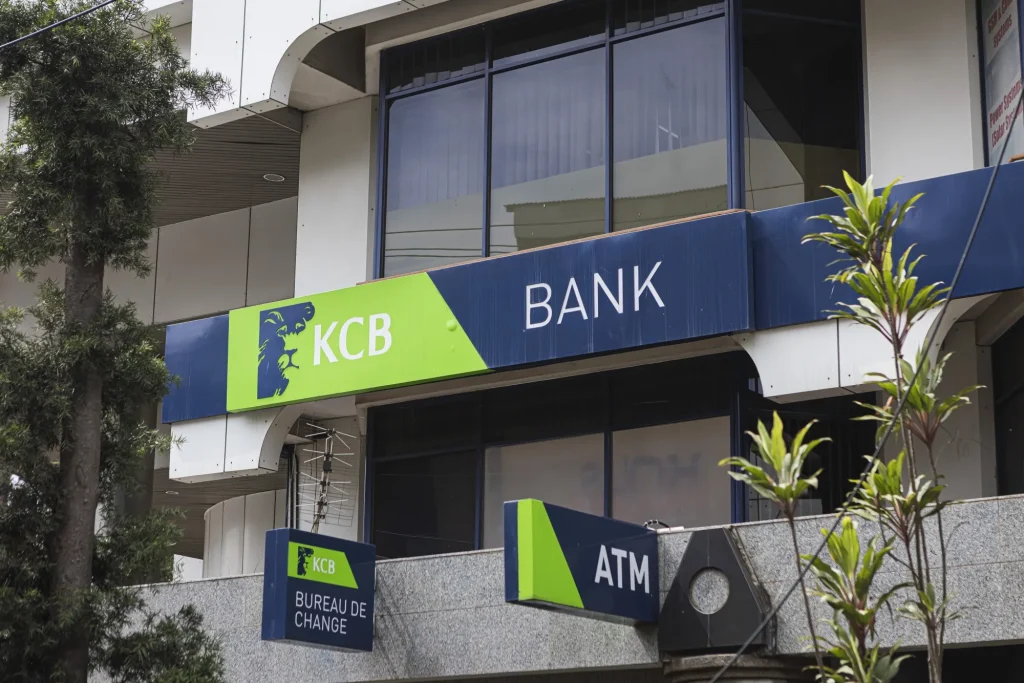
Inside KCB’s risk discipline, capital buffers, and sovereign strategy that make it East Africa’s most resilient tier-1 bank.
The Balance Sheet Fortress: Why Kenya Commercial Bank Outperforms Rivals
A Quiet Strategy That’s Redefining Banking Power
In East Africa’s intensely competitive banking sector, scale and digital reach often dominate headlines. Yet beneath the noise, Kenya Commercial Bank (KCB) has built something far more enduring: a balance sheet fortress anchored in disciplined risk management.
While rivals such as Equity Group Holdings and Absa Bank Kenya push aggressively into retail expansion and digital lending, KCB has taken a more calculated path—prioritizing risk pricing, capital resilience, and sovereign exposure management.
The result is a lender that is not necessarily the fastest-growing, but arguably the most structurally stable tier-1 bank in East Africa.
Risk Pricing as a Competitive Weapon
KCB’s most underappreciated advantage lies in its ability to price risk more accurately than peers. This is particularly evident in its handling of volatile markets such as South Sudan and the Democratic Republic of Congo.
Unlike competitors that often enter frontier markets with aggressive loan growth targets, KCB adopts a tiered lending model:
- Higher-risk jurisdictions attract premium pricing
- Sector exposure is tightly controlled
- Credit is extended primarily to institutional-grade borrowers
This disciplined approach ensures that even in unstable environments, risk-adjusted returns remain positive. By contrast, many regional lenders experience margin erosion when macroeconomic conditions deteriorate.
👉 The intelligence takeaway:
KCB does not chase volume—it monetizes uncertainty.
Loan Book Architecture: Built for Shock Absorption
A deeper look into KCB’s loan book reveals a structure designed not for rapid expansion, but for durability under stress.
What sets KCB apart
- Conservative sectoral exposure limits
- Reduced concentration in high-volatility retail lending
- Strategic tilt toward corporate and government-linked borrowers
This contrasts sharply with the retail-heavy models of Equity Group Holdings and SME-focused strategies of Co-operative Bank of Kenya.
The implication is critical:
During economic downturns, KCB’s loan book is less prone to sudden spikes in non-performing loans (NPLs).
Capital Buffers: The Hidden Shield
KCB’s expansion across East and Central Africa could easily expose it to systemic risks. However, the bank offsets this through strong capital buffers that exceed regulatory minimums in key markets.
Key strengths include
- Robust core capital ratios
- Conservative dividend policies during uncertain cycles
- Strategic capital allocation across subsidiaries
This capital discipline allows KCB to:
- Absorb shocks from currency volatility
- Maintain lending capacity during downturns
- Avoid emergency capital raises that dilute shareholder value
👉 In essence, KCB has built a self-insuring balance sheet, reducing reliance on external support during crises.
Sovereign Risk Navigation: Playing the Long Game
Operating across multiple African jurisdictions exposes KCB to sovereign risk—arguably the most complex variable in frontier banking.
Yet KCB has demonstrated a nuanced ability to navigate this terrain:
- Maintaining strong alignment with the Kenyan government
- Diversifying exposure across multiple countries
- Limiting overdependence on any single sovereign balance sheet
Compared to peers, KCB’s sovereign strategy is less reactive and more anticipatory, allowing it to adjust exposure ahead of macroeconomic shifts.
This becomes particularly important in a region where:
- Currency volatility is frequent
- Fiscal deficits are widening
- Debt sustainability concerns are rising
👉 The result:
KCB remains less vulnerable to sovereign stress shocks than many competitors.
Regional Expansion Without Recklessness
KCB’s footprint across East and Central Africa is often cited as a strength—but what truly differentiates it is how it expands.
Unlike rapid-entry models that prioritize market share, KCB focuses on:
- Gradual scaling
- Institutional partnerships
- Controlled balance sheet deployment
This approach is evident in markets like the DRC, where KCB has prioritized strategic positioning over aggressive lending.
In contrast, banks that expand too quickly often face:
- Asset quality deterioration
- Regulatory friction
- Capital strain
KCB avoids these pitfalls by treating expansion as a risk-managed investment, not a growth race.
The Strategic Trade-Off: Growth vs Stability
KCB’s model is not without trade-offs. By prioritizing risk discipline:
- Growth may appear slower compared to retail-focused peers
- Market perception may undervalue its conservative approach
However, this trade-off is precisely what underpins its strength.
In periods of economic expansion, aggressive lenders may outperform. But in times of:
- Currency shocks
- Interest rate spikes
- Political instability
KCB’s model proves superior—delivering consistent, resilient performance.
Why KCB May Be East Africa’s Safest Tier-1 Bet
The broader implication of KCB’s strategy is clear:
It is positioning itself not as the fastest-growing bank, but as the most dependable financial institution in volatile markets.
Its competitive edge rests on three pillars
- Precision risk pricing
- Shock-resistant loan book design
- Strong capital and sovereign risk management
Together, these create a banking model that is:
- Less exposed to systemic shocks
- Better positioned for long-term profitability
- Structurally superior in uncertain environments
Conclusion: The Rise of a Financial Fortress
In a region where banking success is often measured by growth metrics, Kenya Commercial Bank has rewritten the rules.
Its edge lies not in speed, but in discipline. Not in disruption, but in durability.
As global and regional risks intensify—from energy shocks to currency instability—KCB’s strategy is increasingly proving prescient.
👉 The final intelligence insight:
While competitors build for expansion, KCB has built for survival—and in frontier markets, survival is the ultimate competitive advantage.
Development Finance Institutions (DFIs)
Afreximbank $10B Fund Shields Africa Economies
The fund is expected to boost trade finance and foreign exchange liquidity. Regional banks will play a key role in distributing capital across markets.

Afreximbank launches $10B crisis fund to stabilize African economies amid Middle East shocks, boosting trade finance and FX liquidity.
Afreximbank’s $10 Billion Shock Fund: A Lifeline for East Africa’s Fragile Economies
A Rapid Response to Global Geopolitical Shockwaves
On April 7, 2026, the African Export-Import Bank (Afreximbank) unveiled a $10 billion emergency financing facility, designed to cushion African economies from escalating geopolitical tensions in the Middle East.
The move comes at a time when global supply chains are under strain, energy prices remain volatile, and import-dependent economies face rising fiscal and external pressures. For many African countries, particularly in East and Central Africa, the risk is not theoretical—it is immediate and systemic.
This intervention ranks among the largest emergency liquidity measures deployed on the continent in recent years, underscoring the scale of vulnerability facing African economies in an increasingly uncertain global environment.
Why This Matters: Exposure to External Shocks
The fund is especially relevant to countries such as Uganda, Rwanda, and the Democratic Republic of the Congo.
These economies share key structural characteristics:
- Heavy dependence on fuel imports
- Limited buffers against foreign exchange volatility
- Strong exposure to global supply chain disruptions
As geopolitical tensions in energy-producing regions intensify, these vulnerabilities are amplified. Rising fuel costs feed directly into:
- Inflation
- Transport and logistics expenses
- Industrial production costs
This creates a cascading effect across entire economies, threatening growth, stability, and fiscal balance.
The Mechanics: How the Fund Stabilizes Economies
Afreximbank’s facility is structured to provide rapid liquidity support across multiple channels.
1. Trade Finance Liquidity
The fund will inject capital into trade finance systems, enabling:
- Importers to secure essential goods
- Exporters to maintain operations
- Banks to continue issuing letters of credit
This is critical in preventing a freeze in trade flows, which can quickly escalate into broader economic disruption.
2. Foreign Exchange (FX) Support
One of the most immediate pressures during global shocks is FX scarcity.
The facility helps:
- Stabilize local currencies
- Support central bank reserves
- Ensure access to hard currency for essential imports
For countries like Rwanda and Uganda, this is vital in maintaining macroeconomic stability.
3. Balance-of-Payments Relief
The fund provides a buffer for countries facing external imbalances by:
- Supporting government financing needs
- Reducing pressure on sovereign borrowing
- Enhancing fiscal flexibility
This reduces the likelihood of:
- Currency crises
- Emergency austerity measures
- Disruptions to public spending
Banking Sector: The Transmission Channel
While Afreximbank provides the capital, regional banks will act as the primary transmission mechanism.
Financial institutions across East Africa will:
- Channel funds into trade corridors
- Extend credit to importers and exporters
- Facilitate cross-border transactions
Banks in financial hubs such as Nairobi are particularly well positioned to:
- Intermediate FX flows
- Structure trade finance deals
- Support regional liquidity distribution
This reinforces the role of commercial banks as critical conduits between multilateral capital and real economies.
Strategic Context: A Shift Toward Multilateral Dependence
Afreximbank’s intervention reflects a broader structural shift.
In times of global stress, African economies are increasingly relying on:
- Multilateral financial institutions
- Regional development banks
- Structured financing mechanisms
This trend highlights both:
- The importance of institutions like Afreximbank
- The limitations of domestic financial systems in absorbing large external shocks
Risks and Limitations
Despite its scale, the fund is not a cure-all.
1. Temporary Relief
The facility provides short-term liquidity, but does not address:
- Structural trade imbalances
- Long-term energy dependence
- Fiscal vulnerabilities
2. Distribution Efficiency
The effectiveness of the fund depends on:
- Speed of disbursement
- Efficiency of banking channels
- Targeting of critical sectors
3. External Dependency
Continued reliance on external financing raises questions about:
- Debt sustainability
- Sovereign exposure
- Long-term resilience
Regional Impact: Stabilizing Trade Corridors
The fund is expected to have immediate effects on:
- Fuel supply chains
- Cross-border trade flows
- Logistics and transport networks
By stabilizing these systems, the facility helps prevent:
- Disruptions in regional commerce
- Sharp increases in commodity prices
- Economic spillovers across neighboring countries
This is particularly important in East Africa, where economies are deeply interconnected through trade corridors.
Strategic Takeaways
- Massive Intervention: $10 billion facility signals the scale of global shock exposure
- Targeted Relief: Focus on trade finance, FX liquidity, and balance-of-payments support
- Banking Role: Regional banks will act as key intermediaries
- Short-Term Stabilization: Immediate liquidity boost, but limited structural impact
- Growing Dependence: Multilateral institutions becoming central to crisis response
Bottom Line: A Critical Buffer in a Fragile System
The African Export-Import Bank’s $10 billion shock fund represents a critical financial buffer at a time of heightened global uncertainty.
For East African economies, it offers:
- Immediate liquidity
- Stabilized trade flows
- Temporary relief from external shocks
But it also highlights a deeper reality:
👉 Africa’s financial resilience remains closely tied to external support mechanisms, particularly during periods of global disruption.
As geopolitical tensions persist, the ability of institutions like Afreximbank—and the banks that channel its capital—will be central to maintaining economic stability across the continent.


KCB’s Government Banking Advantage

KCB’s Balance Sheet Fortress Strategy

Afreximbank $10B Fund Shields Africa Economies


-

 Commercial Banking6 days ago
Standard Bank Growth Plan Faces Africa Risks
-

 Governance & Ethics4 days ago
Joe Sang: Inside Kenya’s Fuel System Breakdown
-
 Commercial Banking5 days ago
Co‑op Bank’s SACCO Funding Advantage Shines in 2025
-

 Commercial Banking6 days ago
HF Group Profit Hits Record on Bond Strategy
-

 Commercial Banking5 days ago
Co-op Bank Dividend Yield Kenya Edge
-

 Commercial Banking6 days ago
ABSA Kenya FY2025 Profit Soars Amid Group Growth
-

 Commercial Banking6 days ago
Kenya Capital Drive Faces Execution Test
-

 Commercial Banking3 days ago
Equity Green Finance Africa Leads Growth