
Banking & Finance
Abdirahman Abass: Building a Logistics, Energy Legacy
A key figure in Kenya’s logistics and energy sectors, Abdirahman Abass is driving strategic initiatives for long-term growth and sustainability.

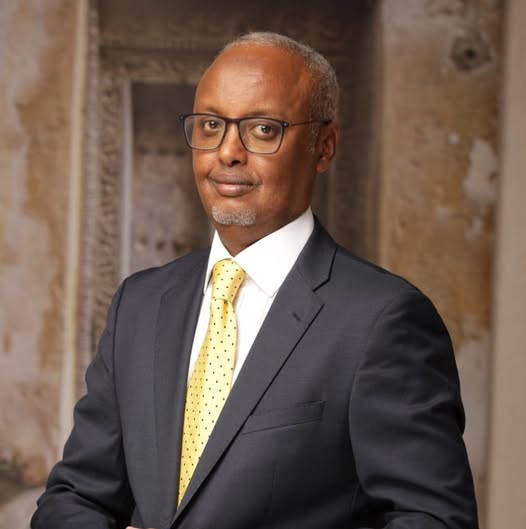
Abdirahman Abass is shaping Kenya’s logistics, energy, and public service sectors with strategic ventures, aiming for lasting impact and sustainable growth
On the industrial edge of Mombasa’s Kipevu area, where cranes clank and tankers loom over the harbor, a silent transformation is unfolding. Six towering LPG storage spheres—each with a capacity of 2,500 tonnes—are the newest addition to a growing logistics and energy empire, masterminded by a soft-spoken but relentless entrepreneur: Faisal Abdirahman Abass.
As the Chairman and co-founder of Focus Container Freight Station (CFS), a firm launched in 2004, Abass has redefined cargo logistics across East and Central Africa. Now, with a Sh354 million gas storage terminal underway and a string of high-profile public appointments under his belt, he’s stepping into a broader national role—at the nexus of infrastructure, policy, and development.
“This is not just about gas,” he says. “It’s about future-proofing Kenya’s energy needs.”
From Mombasa Cargo Yards to National Boards
Born in 1982, Faisal grew up in a devout Somali family rooted in Mandera. Early in life, he leaned toward technology, earning a Diploma in Information Technology, followed by a degree in Project Planning and Management from the University of Nairobi. In 2018, he embarked on a Master’s in Strategic Management, a move that mirrored his long-held belief in “systems thinking.”
That same mindset would shape Focus CFS, the logistics firm he co-founded when Mombasa’s port was still bogged down by inefficiencies and outdated infrastructure. While others chased short-term forwarding deals, Abass bet on long-haul logistics infrastructure and customer trust. The gamble paid off.
Today, Focus CFS is a pillar of Kenya’s import-export economy—clearing cargo, moving containers inland, and serving clients from Uganda, Rwanda, South Sudan, to the DRC.
“We offered something rare in logistics—structure, integrity, and predictability,” he says.
The Energy Pivot
In 2024, through a new entity—Focus CFS Energy Ltd—Abass broke ground on a 15,000-tonne liquefied petroleum gas (LPG) terminal. Situated near the Kipevu Oil Terminal, the project includes bottling facilities and is poised to dramatically improve access to cleaner fuel across Kenya’s towns and counties.
Originally proposed for Changamwe, the project faced community concerns. Abass responded swiftly—relocating the site 208 meters away from residential areas—proving his knack for balancing business ambition with civic responsibility.
“You can’t build sustainable infrastructure without community trust,” he says.
Entrepreneurial Philosophy: Structure Over Speed
To understand Abass’s steady rise, you have to understand his values. Colleagues describe him as methodical, composed, and obsessively organized. He prefers discipline over flamboyance. “An entrepreneur must be honest with himself first,” he says. “If you can’t account for your time, you can’t account for a business.”
He credits his growth to faith, humility, and systems. “Quick wins are fine,” he says. “But legacies are built with patience.”
His charitable foundation focuses on youth education and skills training, especially in Mandera and Mombasa counties. “We rise by lifting others,” he often repeats.
The Public Side: From Energy Boards to National Reform
Abass’s knack for governance has not gone unnoticed by Nairobi’s power corridors. His expertise has led to a string of high-level government appointments, including:
- Chairman of the Privatization Commission, appointed by President Uhuru Kenyatta in July 2022, tasked with guiding Kenya’s privatization policy and public asset management.
- Chairman of the Geothermal Development Company (GDC) and Rural Electrification and Renewable Energy Corporation (REREC).
- Board Director at Kenya Electricity Generating Company (KenGen), where he played a role in its historic listing on the Nairobi Securities Exchange.
- Current Chairman of the Policy Holders Compensation Fund (PCF).
“Public service isn’t prestige—it’s stewardship,” he says. “You apply private-sector discipline to national resources.”
2022: A Shot at Mandera’s Top Job
In the run-up to Kenya’s 2022 general elections, Abass returned to his roots—vying for the Mandera gubernatorial seat. Backed by the Furkesha sub-clan of the Garre community, he ran on a platform of inclusive development, pledging to revamp infrastructure, expand healthcare, and prioritize education.
He ultimately did not win, but the campaign reaffirmed his public credentials.
“Leadership is about showing up—even when you don’t have the title,” he said during a rally in Rhamu.
Legacy in Motion
Faisal Abdirahman Abass does not dominate headlines, nor does he crave the spotlight. But behind the scenes, he is helping reshape Kenya’s infrastructure and energy landscape, while advising on its public-sector transformation.
From dusty cargo yards in Mombasa to boardrooms in Nairobi—and even the campaign trails of Mandera—his reach is expanding.
“I don’t want to be the richest man in the room,” he says. “I want to be the one who built something that lasts.”
And with every sphere welded at his LPG terminal, every container moved through Focus CFS, and every boardroom decision he makes—he is doing just that.
🟪 Sidebar: Career Timeline
| Year | Milestone |
|---|---|
| 1982 | Born in Mandera, Kenya |
| 2004 | Co-founded Focus Container Freight Station (CFS) |
| 2018 | Began MBA in Strategic Management (UoN) |
| 2020 | Appointed Chairman, Policy Holders Compensation Fund |
| 2022 | Ran for Governor, Mandera County (endorsed by Furkesha elders) |
| 2022 | Appointed Chairman, Privatization Commission by President Uhuru Kenyatta |
| 2023 | Launched Focus CFS Energy Ltd LPG terminal project |
| 2024 | Received NEMA nod to proceed with Sh354M gas terminal |
| 2025 | Announced the building of Cooking Gas Storage Plant in Kipevu |
Commercial Banking
Equity Green Finance Africa Leads Growth
The bank’s mobile and branch network ensures deep rural penetration. It reaches areas where formal banking is scarce.
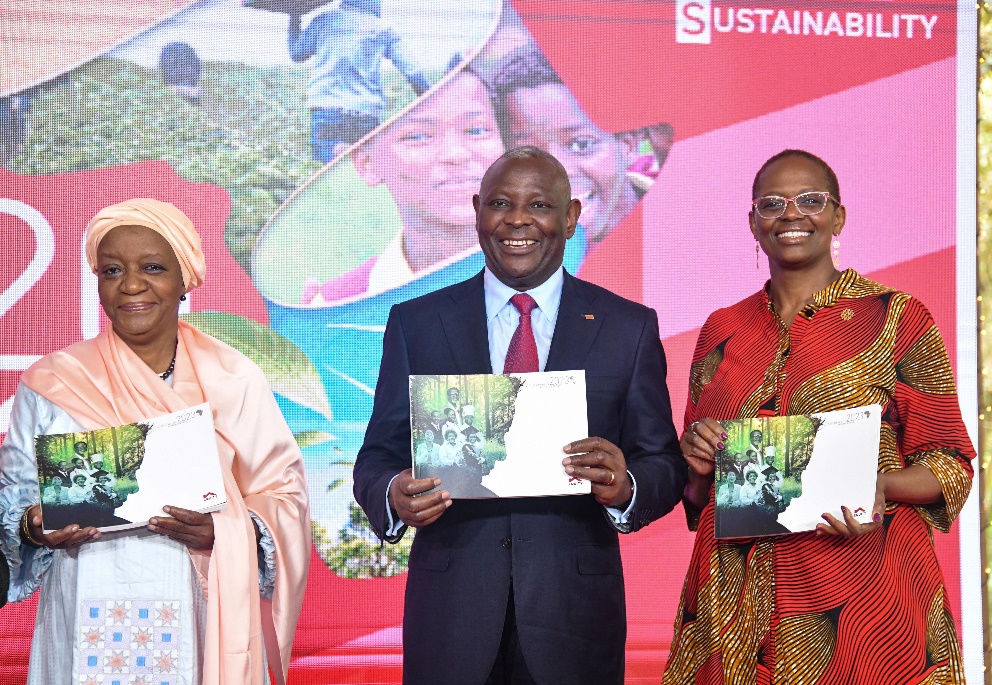
Equity green finance Africa drives mass-market climate solutions, funding solar, agriculture, and MSMEs for sustainable development.
Equity Green Finance Africa: Scaling Climate Impact at the Base
Equity Group Holdings is leading the charge in Equity green finance Africa, placing climate-smart financing directly into the hands of smallholder farmers, micro, small and medium enterprises (MSMEs), and households. As global finance increasingly tilts toward sustainability, the bank has deliberately focused on mass-market climate inclusion, thereby delivering measurable economic and environmental outcomes at scale.
At the center of this strategy sits the Equity Group Foundation, which channels blended finance and donor capital into solar, biogas, irrigation, and climate-smart agriculture solutions. Furthermore, the 2025 Integrated Annual Report indicates that the group has committed over $500 million (≈ KSh 64.5 billion) toward climate-related financing, reaching millions of smallholder farmers and MSMEs.
Image suggestion: Smallholder farmers using solar irrigation
Alt text: “Equity green finance Africa solar irrigation impact”
Scaling Climate Finance at the Base of the Economy
In contrast to peers such as Stanbic Bank Kenya, which prioritize structured ESG corporate lending, Equity has chosen a different path. Instead, the bank deploys small-ticket, high-volume financing, enabling rapid adoption of green technologies among underserved communities.
To illustrate, the bank’s 2025 initiatives include:
- Solar home systems and off-grid energy financing
- Biogas and clean cooking solutions for households
- Climate-smart agriculture inputs such as irrigation kits and drought-resistant seeds
Additionally, partnerships with World Bank financial inclusion programs have expanded outreach across rural economies. As a result, climate resilience is embedded directly into livelihoods, rather than remaining a top-down policy ambition.
Real-Life Impact Across Communities
Across regions, the results are increasingly visible. In western Kenya, for instance, a group of 100 smallholder maize farmers accessed solar-powered irrigation systems financed through Equity-backed programs. Consequently, their yields rose by approximately 30% within a single season.
At the same time, micro-enterprises in Kisumu adopting biogas systems have reported energy cost reductions of up to 40%, while also lowering dependence on charcoal. Taken together, these outcomes highlight how Equity’s climate inclusion model converts capital into measurable impact, rather than abstract sustainability commitments.
Image suggestion: Biogas-powered SME in Kisumu
Alt text: “Equity green finance Africa clean energy SME”
Distribution as a Strategic Advantage
Crucially, Equity’s strength lies not in complex product design but in distribution scale. With one of the largest customer bases in Africa, the bank leverages multiple channels to expand access efficiently.
For example:
- Mobile and agency banking platforms extend reach into remote regions
- A customer base exceeding 14 million in Kenya supports rapid rollout
- Community-based engagement strengthens grassroots adoption
Because of this, the bank scales Equity green finance Africa far more effectively than competitors. In contrast to traditional banking models, it penetrates informal economies where collateral is limited but demand remains strong.
A Different Approach to ESG
Rather than focusing on headline ESG transactions, Equity has built a model centered on inclusion. Specifically, its approach prioritizes climate inclusion at scale, livelihood-linked financing, and economic resilience in underserved communities.
Moreover, this framework aligns closely with global financial inclusion standards, which emphasize access as the primary constraint in emerging markets. Consequently, the bank demonstrates that sustainability can be achieved through breadth of access, not just financial structuring.
Strategic Trade-Offs and Market Position
Naturally, this approach involves trade-offs. On one hand, Equity delivers broad-based impact and deep market penetration. On the other, it generates fewer high-profile ESG transactions compared to peers.
For comparison:
- Stanbic Bank Kenya focuses on structured ESG and sustainability-linked loans
- KCB Group emphasizes large-scale infrastructure financing
- Absa Bank Kenya drives ESG product innovation
Even so, Equity’s model stands apart. By prioritizing scale over sophistication, it positions itself as East Africa’s largest climate inclusion engine.
Global Context and Future Outlook
Across emerging markets, demand for climate finance continues to rise. At the same time, investors are increasingly seeking models that combine financial returns with measurable impact.
In this context, Equity’s approach offers a compelling blueprint. Not only does it attract development finance, but it also appeals to private capital focused on sustainability outcomes. Furthermore, its scalability makes it adaptable across African markets where smallholder farmers and MSMEs dominate economic activity.
Conclusion: Redefining Green Finance
Ultimately, Equity Group Holdings is reshaping the meaning of green finance in Africa. By deploying over $500 million into solar, biogas, and climate-smart agriculture, the bank is embedding sustainability directly into everyday economic activity.
While competitors focus on structuring large ESG deals, Equity is transforming livelihoods at scale. Therefore, the future of Equity green finance Africa may not lie in financial complexity but in access, distribution, and measurable real-world impact.
Commercial Banking
Stanbic vs Rivals in Kenya’s Green Finance Race
KCB is financing large green infrastructure and corporate projects. Its strength lies in balance sheet capacity.
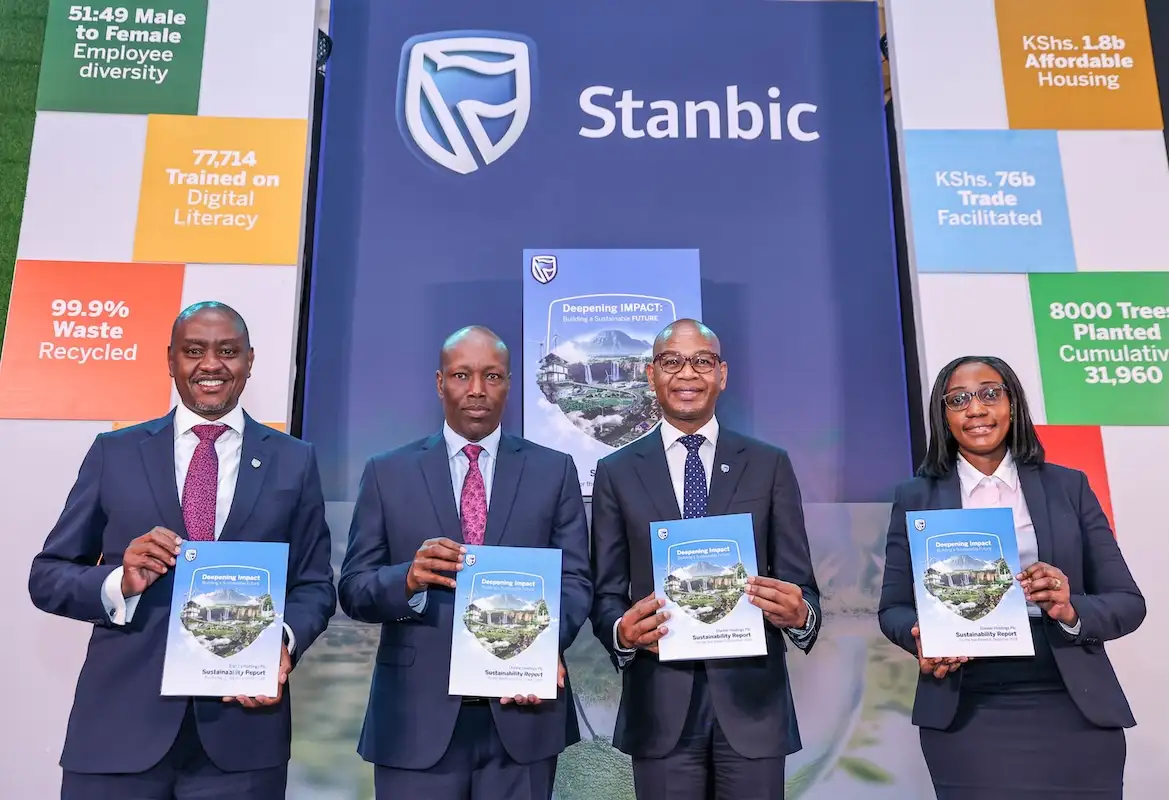
Stanbic, Equity, KCB and Absa are racing to dominate green finance in Kenya. Here’s how their ESG strategies compare in 2025.
Kenya’s Green Finance Battle: Who Is Really Leading?
Kenya’s banking sector is entering a decisive phase in climate finance, with Stanbic Bank Kenya, Equity Group Holdings, KCB Group and Absa Bank Kenya all scaling environmental, social and governance (ESG) lending.
But beneath the shared narrative of sustainability lies a clear divergence in strategy, execution and scale.
Stanbic: Structured ESG as a Core Banking Model
Stanbic has taken perhaps the most institutionally embedded approach to green finance.
Its model is defined by:
- ESG screening integrated into all large loans
- Active structuring of sustainability-linked deals
- Target to green ~10% of its loan book
The bank’s participation in a KSh 15 billion (≈ $116 million) sustainability-linked loan for Safaricom illustrates its edge—not just lending, but structuring performance-based ESG financing.
Crucially, Stanbic is leveraging its parent, Standard Bank Group, to align with global climate finance standards—giving it stronger access to international capital.
👉 Positioning: Most sophisticated ESG structurer in Kenya
Equity Group: Scale and Climate Inclusion at the Base
Equity Group Holdings is taking a different route—focusing on scale and mass-market climate financing.
Through its foundation and partnerships, Equity has:
- Committed over $500 million toward climate finance initiatives
- Financed clean energy solutions such as solar kits and biogas
- Targeted millions of smallholder farmers and MSMEs
Its model is less about complex ESG instruments and more about broad-based climate inclusion.
Equity’s strength lies in distribution—its vast customer base allows it to push green products deep into rural and informal markets.
👉 Positioning: Largest climate inclusion engine
KCB Group: Corporate Green Deals and Balance Sheet Strength
KCB Group sits somewhere between Stanbic and Equity.
Its strategy focuses on:
- Large-scale corporate and infrastructure financing
- Green project funding (energy, manufacturing, agribusiness)
- Regional expansion of ESG lending
KCB has committed billions toward sustainable finance and is actively aligning with global frameworks such as the UN Principles for Responsible Banking.
However, its ESG model remains more portfolio-driven than structurally embedded, compared to Stanbic.
👉 Positioning: Corporate-scale green financier
Absa Kenya: ESG Integration and Product Innovation
Absa Bank Kenya is focusing on product innovation and internal ESG alignment.
Key initiatives include:
- Green bonds and sustainable finance products
- Internal carbon reduction strategies
- SME-focused green financing
Absa has also been active in advisory and structuring roles, though at a smaller scale compared to Stanbic.
Its strength lies in financial engineering and ESG product design, but it is still building scale.
👉 Positioning: Emerging ESG product innovator
Where the Real Differences Lie
1. Depth vs Breadth
- Stanbic: Deep, structured ESG integration
- Equity: Wide, mass-market reach
- KCB: Large corporate deals
- Absa: Product innovation
2. Type of Green Finance
- Stanbic: Sustainability-linked loans, structured ESG deals
- Equity: Solar, agriculture, MSME financing
- KCB: Infrastructure and corporate green lending
- Absa: Green bonds, advisory, niche products
3. Access to Global Capital
- Stanbic: Strong (via Standard Bank Group)
- Equity: Strong (DFI partnerships)
- KCB: Moderate to strong
- Absa: Growing
The Strategic Divide: Two Competing Models
Kenya’s green finance market is effectively splitting into two dominant models:
🔹 1. Institutional ESG Finance (Stanbic Model)
- Structured deals
- Performance-linked lending
- Global capital alignment
🔹 2. Mass Climate Inclusion (Equity Model)
- High-volume lending
- Rural and SME penetration
- Development-driven approach
KCB and Absa operate in hybrid territory between these poles.
Who Is Winning?
The answer depends on the metric:
- Most advanced ESG structuring: Stanbic
- Biggest reach and impact: Equity
- Largest corporate deals: KCB
- Most innovative products: Absa
But in terms of future positioning, Stanbic’s model may offer the strongest leverage.
Why?
Because global capital is increasingly flowing toward:
- Measurable ESG outcomes
- Structured sustainability-linked instruments
- Banks with integrated climate risk frameworks
The Bigger Picture: A Market Entering Maturity
Kenya is one of Africa’s most advanced green finance markets, supported by:
- Over 80% renewable energy generation
- Strong regulatory backing
- Growing investor interest in ESG assets
This is pushing banks to move beyond narrative into execution and measurable impact.
Conclusion: A Defining Decade for Green Banking
The competition between Stanbic, Equity, KCB and Absa is not just about market share—it is about defining the future model of African banking.
- Will it be structured, globally aligned ESG finance?
- Or mass-market climate inclusion at scale?
For now, Kenya is hosting both experiments in real time.
And for investors watching closely, one thing is clear:
green finance is no longer optional—it is the next battleground for banking dominance in Africa.
Commercial Banking
Stanbic Green Finance Push Accelerates
Stanbic is targeting at least 10% of its portfolio as green. The shift reflects a structural change in lending strategy.
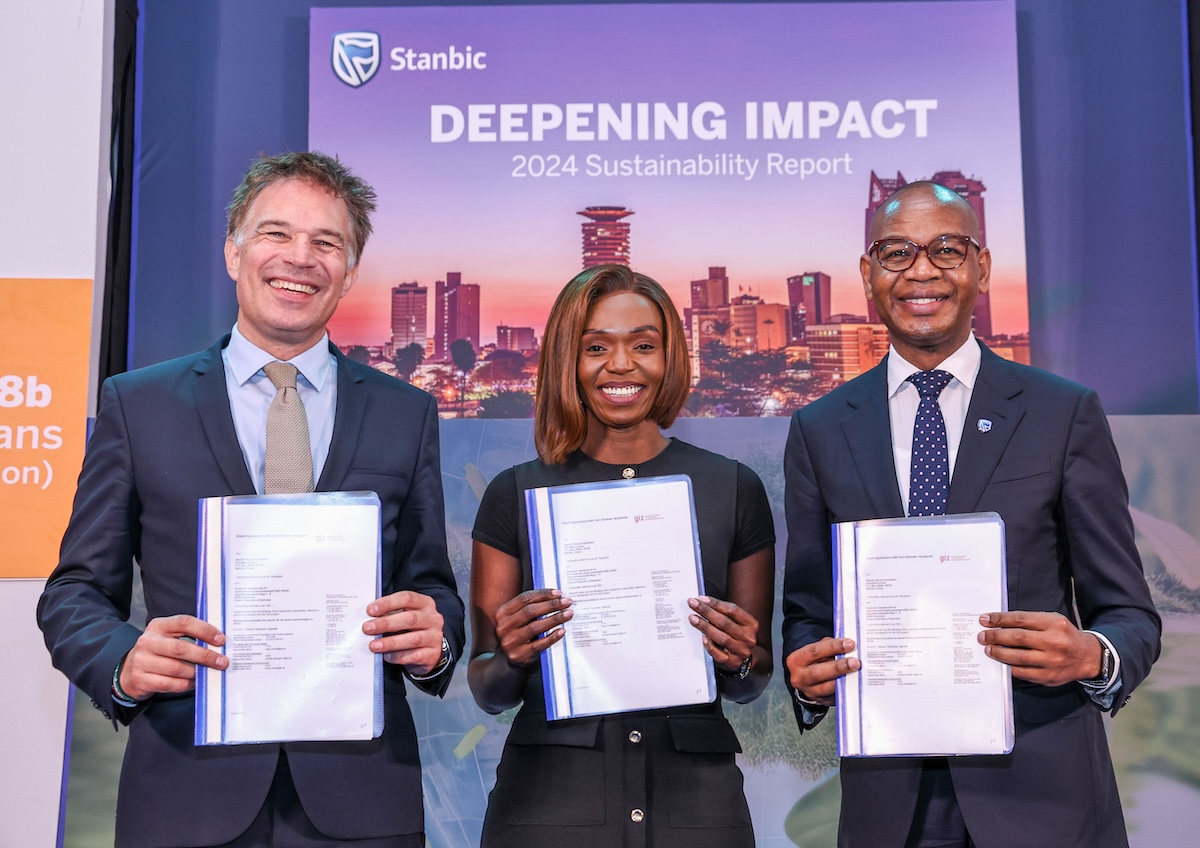
Stanbic Bank Kenya scales green finance in 2025, expanding solar loans, ESG deals and climate-linked funding to back Kenya’s transition.
Stanbic’s Green Finance Strategy Enters Scale Phase
Stanbic Bank Kenya is accelerating its transition into a sustainability-led lender, scaling climate finance across its portfolio in 2025 as it positions itself at the centre of Kenya’s green economic shift.
Building on momentum from its latest sustainability disclosures, the bank has moved beyond policy commitments into active capital deployment across renewable energy, green real estate and sustainability-linked corporate financing.
This is no longer ESG as narrative—this is ESG as balance sheet strategy.
2025: From Commitments to Capital
Stanbic’s green finance activity in 2025 reflects a clear acceleration phase.
The bank expanded its renewable energy lending, issuing over KSh 500 million (≈ $3.9 million) in solar financing, while deepening participation in sustainability-linked transactions tied to measurable environmental outcomes, as detailed in recent sector reporting.
At the corporate level, Stanbic also participated in a KSh 15 billion (≈ $116 million) sustainability-linked loan for Safaricom, one of Kenya’s largest ESG-linked financings to date, where pricing is tied directly to environmental performance targets.
This signals a structural shift: capital is increasingly being priced against sustainability metrics.
Leadership Signal: ESG as Core Strategy
Stanbic’s leadership has been explicit about the shift.
Speaking in recent sustainability updates, Joshua Oigara emphasized that “sustainability is embedded in how we allocate capital and manage risk,” reinforcing the bank’s transition toward climate-aligned lending.
This marks a departure from traditional banking models, where environmental considerations were often peripheral. At Stanbic, ESG is now integrated into:
- Sector selection
- Credit structuring
- Risk assessment frameworks
Every major deal is increasingly screened through an environmental and social lens.
Green Portfolio Expansion and Targets
Stanbic’s green portfolio is steadily expanding, with sustainability-linked lending now accounting for a growing share of its overall loan book.
The bank is targeting at least 10% of its portfolio to be green or sustainability-linked, building on an estimated 8% base achieved by 2024, according to industry disclosures and sustainability reporting.
Key sectors driving this growth include:
- Renewable energy (solar and distributed power systems)
- Sustainable agriculture (climate-resilient inputs and irrigation)
- Green real estate (energy-efficient buildings)
- E-mobility (low-emission transport financing)
This sectoral diversification reflects a deliberate alignment with Kenya’s climate priorities.
Financing Kenya’s Energy Transition
Kenya already generates more than 80% of its electricity from renewable sources, making it one of Africa’s clean energy leaders.
Stanbic is positioning itself as a key financial intermediary in scaling this transition further, particularly in distributed solar and commercial energy solutions.
Through targeted solar lending and project financing, the bank is supporting:
- SMEs transitioning to off-grid solar
- Commercial and industrial energy users
- Real estate developers integrating green technologies
Internally, the bank is also advancing sustainability, including solar adoption across its own operations, reinforcing credibility with ESG-focused investors.
Structuring the Future: ESG-Linked Finance
Beyond direct lending, Stanbic is playing an increasingly important role in structuring ESG-linked financial instruments.
The Safaricom sustainability-linked facility represents a broader trend where:
- Loan pricing is tied to emissions reductions
- Borrowers commit to measurable ESG targets
- Banks embed sustainability into deal structures
This model is gaining traction globally—and Stanbic is among the early movers in East Africa.
Competitive Advantage in a Crowded Market
Stanbic’s green finance strategy provides a clear differentiator in Kenya’s banking sector.
Three advantages stand out:
1. Integrated ESG Risk Framework
Unlike many competitors, Stanbic embeds climate risk directly into credit decision-making.
2. Deal Structuring Capability
The bank is active not just in lending, but in structuring complex sustainability-linked transactions.
3. Global Alignment
Through its parent, Standard Bank Group, Stanbic aligns with global ESG standards, enhancing its ability to attract international capital.
This positions the bank as a bridge between global climate finance and local economic opportunities.
The Global Capital Angle
Climate finance is rapidly becoming one of the most important capital flows into emerging markets.
With global investors increasingly allocating funds toward ESG-compliant assets, Stanbic’s positioning offers a strategic advantage:
- Access to development finance institutions
- Alignment with global climate frameworks
- Ability to intermediate large-scale green capital flows
In effect, the bank is not just financing projects—it is building a pipeline for international climate capital into Kenya.
Conclusion: Banking on the Green Transition
Stanbic Bank Kenya’s green finance push has entered a decisive phase in 2025.
With KSh 500 million ($3.9 million) already deployed in solar lending, active participation in $116 million ESG-linked deals, and a clear roadmap toward greening its loan book, the bank is transforming sustainability into a core business line.
For global investors and policymakers, the message is unmistakable:
Stanbic is positioning itself not just as a bank—but as a climate finance platform for East Africa.


KPC–Zakhem Deal: Debt, Disputes, Billions

Equity Green Finance Africa Leads Growth

Stanbic vs Rivals in Kenya’s Green Finance Race


-

 Commercial Banking7 days ago
Kenya Banks Competitive Growth Insights 2026
-

 Commercial Banking4 days ago
Standard Bank Growth Plan Faces Africa Risks
-

 Boardroom Leadership6 days ago
East Africa Women CEOs 2025 Rankings
-

 Entrepreneur6 days ago
East Africa’s Richest 2025: Top 10 Revealed
-
 Commercial Banking4 days ago
Kenya Capital Drive Faces Execution Test
-

 Commercial Banking4 days ago
HF Group Profit Hits Record on Bond Strategy
-

 Fintech6 days ago
Top Capitalized Fintechs in East Africa 2025
-

 Governance & Ethics2 days ago
Joe Sang: Inside Kenya’s Fuel System Breakdown