
Banking & Finance
Odinga Family Unveils Sh120B Kisumu Marina Project
As ODM joins the government and the Odinga family expands its economic interests, the Sh120 billion Kisumu real estate project promises to redefine the city’s skyline and reshape Kenya’s political and economic landscape. Whether this marks a business opportunity or a broader political shift, one thing is clear: Kisumu stands on the brink of a historic transformation.


Raila Odinga launches Sh120B Lakeview Marina in Kisumu, signaling economic revival and political realignment in western Kenya.
🏗️ Odinga Family Unveils Sh120B Kisumu Marina Project
By Peter Wafula
In what is being viewed as both a business and political masterstroke, the Odinga family has announced a Sh120 billion ($929M) real estate project in Kisumu, dubbed the Lakeview Marina (LV Marina).
The development—one of the largest in western Kenya—comes weeks after the Orange Democratic Movement (ODM), led by Raila Odinga, joined President William Ruto’s government under a broad-based governance framework.
🏙️ Transforming Kisumu into a Modern Hub
The LV Marina project will feature:
- Luxury residences
- Office spaces
- High-end hotels
- Recreational and green facilities
“This is more than just a real estate project—it’s about transforming Kisumu into a thriving economic powerhouse,” Odinga said during the signing event.
The initiative is expected to create over 10,000 direct jobs during construction, with thousands more in long-term operations.
🏭 From Molasses Plant to Marina: The Site’s History
The 285-acre project site was once home to the Kisumu molasses plant, initially established in the 1970s and revived by the Odinga family in the 1990s.
Due to limited productivity, plans shifted to alternative economic uses—now culminating in the LV Marina.
“The decline of the molasses plant highlighted the need for sustainable initiatives,” said Odinga.
📆 Phased Project Rollout
Phase 1 (2024–2027):
- Sh40B budget
- Marina construction
- Luxury homes & retail
- Healthcare & education facilities
- Green infrastructure
Phases 2 & 3 (2027–2030):
- Commercial & hospitality expansion
- Mixed-use developments
🧭 Political and Economic Signals
The project’s timing has stirred political speculation. Prof. Herman Manyora noted:
“This is not just a business venture; it’s strategic positioning… It could reshape development priorities in western Kenya.”
ODM’s recent cooperation with Ruto’s administration may unlock more government-backed investments in the historically underfunded region.
🇰🇪 Government Reaction
President Ruto called the project:
“A milestone in Kenya’s urban development… Kenyans investing in Kenya, creating jobs, and building prosperity.”
However, Dr. Robert Shaw, a governance expert, warned:
“The timing raises questions… whether it’s business or political bargaining remains to be seen.”
👨👩👦 Odinga Family’s Legacy Shift
“This is a generational project that will outlive political cycles,” said Raila Odinga Jr.
The LV Marina marks a transition from political dominance to economic leadership for the Odingas.
🧱 Conclusion: Business, Politics & Legacy
As the Lakeview Marina project takes shape, it could redefine:
- Kisumu’s skyline
- Regional economic power
- Political allegiances in Kenya
Whether seen as an economic venture or a strategic political pivot, one thing is certain: Kisumu is on the verge of historic transformation.












Commercial Banking
Stanbic vs Rivals in Kenya’s Green Finance Race
KCB is financing large green infrastructure and corporate projects. Its strength lies in balance sheet capacity.
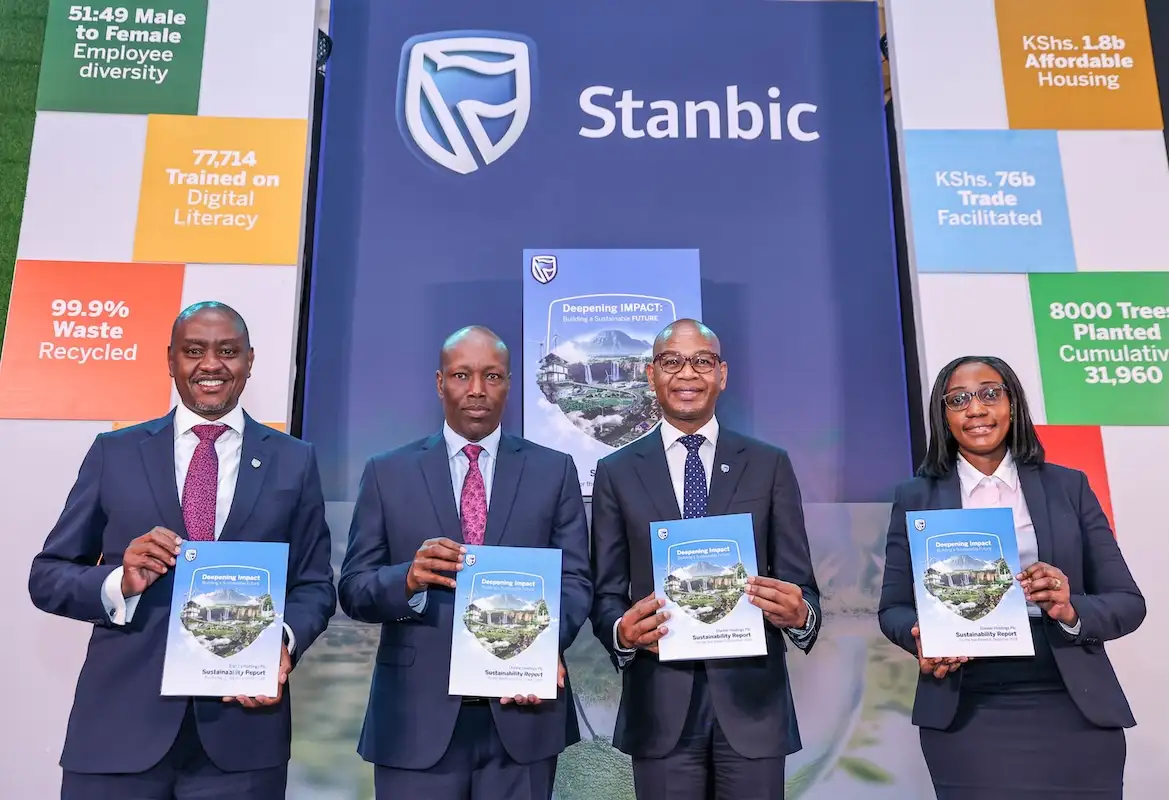
Stanbic, Equity, KCB and Absa are racing to dominate green finance in Kenya. Here’s how their ESG strategies compare in 2025.
Kenya’s Green Finance Battle: Who Is Really Leading?
Kenya’s banking sector is entering a decisive phase in climate finance, with Stanbic Bank Kenya, Equity Group Holdings, KCB Group and Absa Bank Kenya all scaling environmental, social and governance (ESG) lending.
But beneath the shared narrative of sustainability lies a clear divergence in strategy, execution and scale.
Stanbic: Structured ESG as a Core Banking Model
Stanbic has taken perhaps the most institutionally embedded approach to green finance.
Its model is defined by:
- ESG screening integrated into all large loans
- Active structuring of sustainability-linked deals
- Target to green ~10% of its loan book
The bank’s participation in a KSh 15 billion (≈ $116 million) sustainability-linked loan for Safaricom illustrates its edge—not just lending, but structuring performance-based ESG financing.
Crucially, Stanbic is leveraging its parent, Standard Bank Group, to align with global climate finance standards—giving it stronger access to international capital.
👉 Positioning: Most sophisticated ESG structurer in Kenya
Equity Group: Scale and Climate Inclusion at the Base
Equity Group Holdings is taking a different route—focusing on scale and mass-market climate financing.
Through its foundation and partnerships, Equity has:
- Committed over $500 million toward climate finance initiatives
- Financed clean energy solutions such as solar kits and biogas
- Targeted millions of smallholder farmers and MSMEs
Its model is less about complex ESG instruments and more about broad-based climate inclusion.
Equity’s strength lies in distribution—its vast customer base allows it to push green products deep into rural and informal markets.
👉 Positioning: Largest climate inclusion engine
KCB Group: Corporate Green Deals and Balance Sheet Strength
KCB Group sits somewhere between Stanbic and Equity.
Its strategy focuses on:
- Large-scale corporate and infrastructure financing
- Green project funding (energy, manufacturing, agribusiness)
- Regional expansion of ESG lending
KCB has committed billions toward sustainable finance and is actively aligning with global frameworks such as the UN Principles for Responsible Banking.
However, its ESG model remains more portfolio-driven than structurally embedded, compared to Stanbic.
👉 Positioning: Corporate-scale green financier
Absa Kenya: ESG Integration and Product Innovation
Absa Bank Kenya is focusing on product innovation and internal ESG alignment.
Key initiatives include:
- Green bonds and sustainable finance products
- Internal carbon reduction strategies
- SME-focused green financing
Absa has also been active in advisory and structuring roles, though at a smaller scale compared to Stanbic.
Its strength lies in financial engineering and ESG product design, but it is still building scale.
👉 Positioning: Emerging ESG product innovator
Where the Real Differences Lie
1. Depth vs Breadth
- Stanbic: Deep, structured ESG integration
- Equity: Wide, mass-market reach
- KCB: Large corporate deals
- Absa: Product innovation
2. Type of Green Finance
- Stanbic: Sustainability-linked loans, structured ESG deals
- Equity: Solar, agriculture, MSME financing
- KCB: Infrastructure and corporate green lending
- Absa: Green bonds, advisory, niche products
3. Access to Global Capital
- Stanbic: Strong (via Standard Bank Group)
- Equity: Strong (DFI partnerships)
- KCB: Moderate to strong
- Absa: Growing
The Strategic Divide: Two Competing Models
Kenya’s green finance market is effectively splitting into two dominant models:
🔹 1. Institutional ESG Finance (Stanbic Model)
- Structured deals
- Performance-linked lending
- Global capital alignment
🔹 2. Mass Climate Inclusion (Equity Model)
- High-volume lending
- Rural and SME penetration
- Development-driven approach
KCB and Absa operate in hybrid territory between these poles.
Who Is Winning?
The answer depends on the metric:
- Most advanced ESG structuring: Stanbic
- Biggest reach and impact: Equity
- Largest corporate deals: KCB
- Most innovative products: Absa
But in terms of future positioning, Stanbic’s model may offer the strongest leverage.
Why?
Because global capital is increasingly flowing toward:
- Measurable ESG outcomes
- Structured sustainability-linked instruments
- Banks with integrated climate risk frameworks
The Bigger Picture: A Market Entering Maturity
Kenya is one of Africa’s most advanced green finance markets, supported by:
- Over 80% renewable energy generation
- Strong regulatory backing
- Growing investor interest in ESG assets
This is pushing banks to move beyond narrative into execution and measurable impact.
Conclusion: A Defining Decade for Green Banking
The competition between Stanbic, Equity, KCB and Absa is not just about market share—it is about defining the future model of African banking.
- Will it be structured, globally aligned ESG finance?
- Or mass-market climate inclusion at scale?
For now, Kenya is hosting both experiments in real time.
And for investors watching closely, one thing is clear:
green finance is no longer optional—it is the next battleground for banking dominance in Africa.
Commercial Banking
Stanbic Green Finance Push Accelerates
Stanbic is targeting at least 10% of its portfolio as green. The shift reflects a structural change in lending strategy.
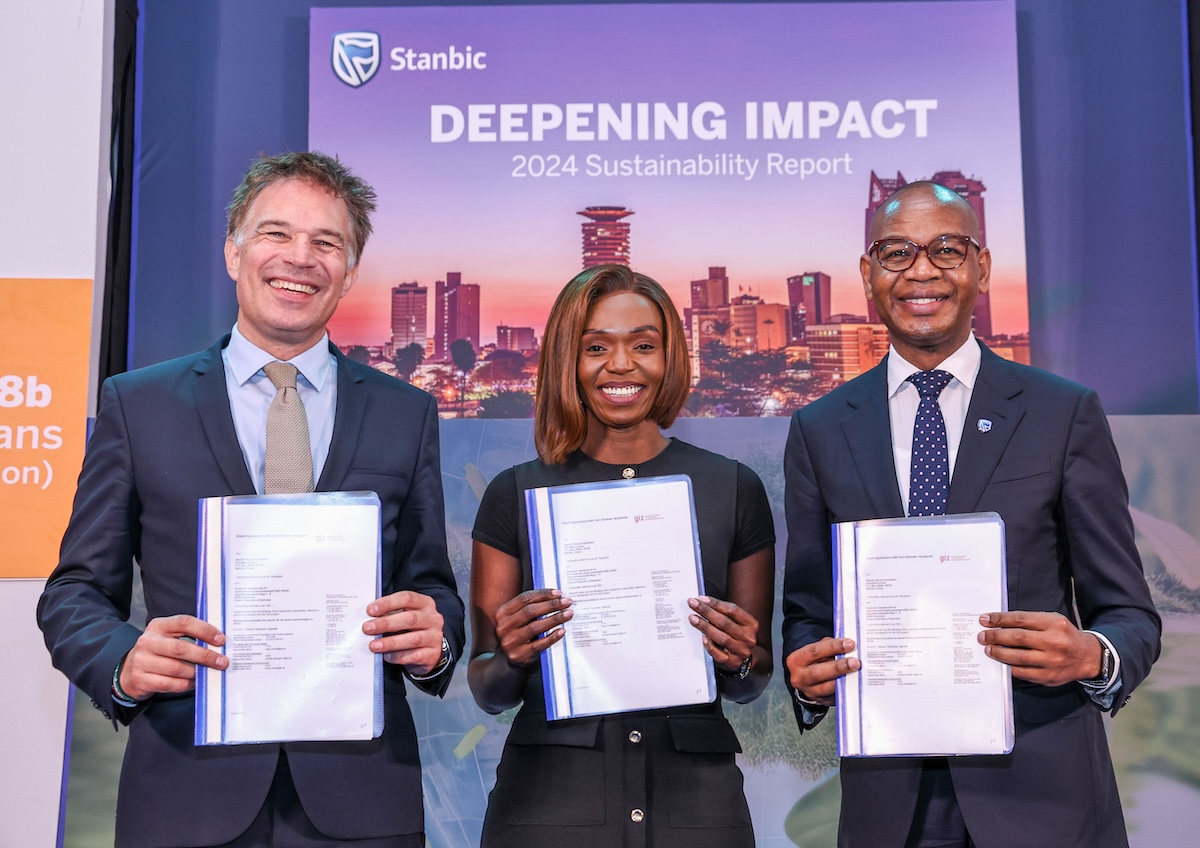
Stanbic Bank Kenya scales green finance in 2025, expanding solar loans, ESG deals and climate-linked funding to back Kenya’s transition.
Stanbic’s Green Finance Strategy Enters Scale Phase
Stanbic Bank Kenya is accelerating its transition into a sustainability-led lender, scaling climate finance across its portfolio in 2025 as it positions itself at the centre of Kenya’s green economic shift.
Building on momentum from its latest sustainability disclosures, the bank has moved beyond policy commitments into active capital deployment across renewable energy, green real estate and sustainability-linked corporate financing.
This is no longer ESG as narrative—this is ESG as balance sheet strategy.
2025: From Commitments to Capital
Stanbic’s green finance activity in 2025 reflects a clear acceleration phase.
The bank expanded its renewable energy lending, issuing over KSh 500 million (≈ $3.9 million) in solar financing, while deepening participation in sustainability-linked transactions tied to measurable environmental outcomes, as detailed in recent sector reporting.
At the corporate level, Stanbic also participated in a KSh 15 billion (≈ $116 million) sustainability-linked loan for Safaricom, one of Kenya’s largest ESG-linked financings to date, where pricing is tied directly to environmental performance targets.
This signals a structural shift: capital is increasingly being priced against sustainability metrics.
Leadership Signal: ESG as Core Strategy
Stanbic’s leadership has been explicit about the shift.
Speaking in recent sustainability updates, Joshua Oigara emphasized that “sustainability is embedded in how we allocate capital and manage risk,” reinforcing the bank’s transition toward climate-aligned lending.
This marks a departure from traditional banking models, where environmental considerations were often peripheral. At Stanbic, ESG is now integrated into:
- Sector selection
- Credit structuring
- Risk assessment frameworks
Every major deal is increasingly screened through an environmental and social lens.
Green Portfolio Expansion and Targets
Stanbic’s green portfolio is steadily expanding, with sustainability-linked lending now accounting for a growing share of its overall loan book.
The bank is targeting at least 10% of its portfolio to be green or sustainability-linked, building on an estimated 8% base achieved by 2024, according to industry disclosures and sustainability reporting.
Key sectors driving this growth include:
- Renewable energy (solar and distributed power systems)
- Sustainable agriculture (climate-resilient inputs and irrigation)
- Green real estate (energy-efficient buildings)
- E-mobility (low-emission transport financing)
This sectoral diversification reflects a deliberate alignment with Kenya’s climate priorities.
Financing Kenya’s Energy Transition
Kenya already generates more than 80% of its electricity from renewable sources, making it one of Africa’s clean energy leaders.
Stanbic is positioning itself as a key financial intermediary in scaling this transition further, particularly in distributed solar and commercial energy solutions.
Through targeted solar lending and project financing, the bank is supporting:
- SMEs transitioning to off-grid solar
- Commercial and industrial energy users
- Real estate developers integrating green technologies
Internally, the bank is also advancing sustainability, including solar adoption across its own operations, reinforcing credibility with ESG-focused investors.
Structuring the Future: ESG-Linked Finance
Beyond direct lending, Stanbic is playing an increasingly important role in structuring ESG-linked financial instruments.
The Safaricom sustainability-linked facility represents a broader trend where:
- Loan pricing is tied to emissions reductions
- Borrowers commit to measurable ESG targets
- Banks embed sustainability into deal structures
This model is gaining traction globally—and Stanbic is among the early movers in East Africa.
Competitive Advantage in a Crowded Market
Stanbic’s green finance strategy provides a clear differentiator in Kenya’s banking sector.
Three advantages stand out:
1. Integrated ESG Risk Framework
Unlike many competitors, Stanbic embeds climate risk directly into credit decision-making.
2. Deal Structuring Capability
The bank is active not just in lending, but in structuring complex sustainability-linked transactions.
3. Global Alignment
Through its parent, Standard Bank Group, Stanbic aligns with global ESG standards, enhancing its ability to attract international capital.
This positions the bank as a bridge between global climate finance and local economic opportunities.
The Global Capital Angle
Climate finance is rapidly becoming one of the most important capital flows into emerging markets.
With global investors increasingly allocating funds toward ESG-compliant assets, Stanbic’s positioning offers a strategic advantage:
- Access to development finance institutions
- Alignment with global climate frameworks
- Ability to intermediate large-scale green capital flows
In effect, the bank is not just financing projects—it is building a pipeline for international climate capital into Kenya.
Conclusion: Banking on the Green Transition
Stanbic Bank Kenya’s green finance push has entered a decisive phase in 2025.
With KSh 500 million ($3.9 million) already deployed in solar lending, active participation in $116 million ESG-linked deals, and a clear roadmap toward greening its loan book, the bank is transforming sustainability into a core business line.
For global investors and policymakers, the message is unmistakable:
Stanbic is positioning itself not just as a bank—but as a climate finance platform for East Africa.
Commercial Banking
Stanbic Women Finance Surge in Kenya
Dada Mashinani is extending credit into Kenya’s informal economy. The initiative targets traders excluded from traditional banking systems.
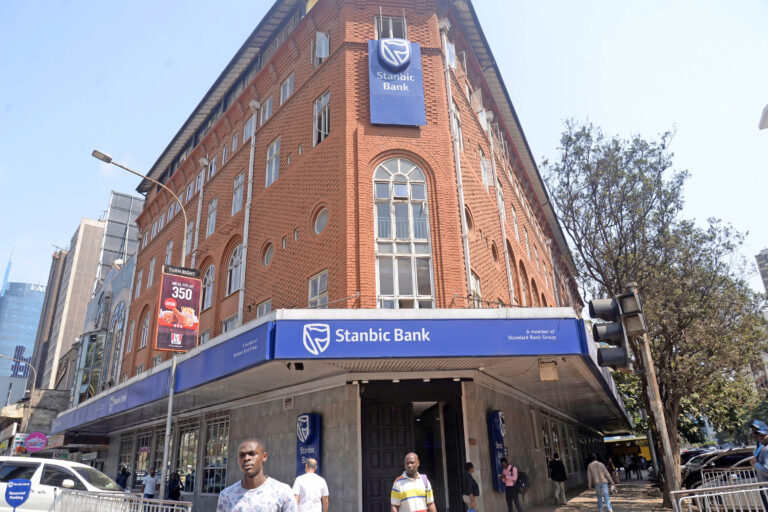
Stanbic deploys billions to women-led SMEs, blending finance, mentorship and partnerships to unlock scalable, inclusive growth.
Stanbic’s Strategic Bet on Women Entrepreneurs
Stanbic Bank Kenya is quietly executing one of the most structured gender-lens financing strategies in Africa, combining large-scale capital deployment with advisory and ecosystem support to unlock women-led enterprise growth.
The bank has disbursed KSh 37.8 billion (≈ $292 million) to women entrepreneurs, according to its 2024 Sustainability Report, anchoring its push through the DADA women’s banking platform, a blended model integrating credit, mentorship and enterprise development.
This is not peripheral banking—it is core strategy.
Scaling Capital Into a Proven Segment
Stanbic’s gender financing model has scaled rapidly over the past five years. By 2022, the bank had already channelled KSh 6.9 billion (≈ $53 million) to women-led SMEs, reaching over 45,000 entrepreneurs, as reported by TechMoran.
That number has since expanded significantly, with the programme now supporting more than 100,000 women-led businesses, placing Stanbic among the largest gender-finance players in East Africa.
Crucially, this expansion reflects a shift from collateral-heavy lending toward cashflow-based credit models, allowing the bank to price risk more accurately in SME segments traditionally excluded from formal finance.
Embedding Capability Into Credit
Stanbic’s differentiation lies in embedding non-financial services directly into its lending framework.
Through DADA, the bank has trained over 17,000 women in business and financial management, while facilitating access to networks and markets. The programme also integrates social interventions, including healthcare access, reflecting a broader view of enterprise sustainability.
As the bank states in its DADA programme framework, “women are a key pillar in our society,” adding that targeted support is essential to enable them to “learn, connect and grow.”
This framing aligns with global development priorities outlined by the World Bank, which identifies women entrepreneurs as among the most underserved yet commercially viable segments in emerging markets.
Leadership Framing: From Inclusion to Strategy
Stanbic’s leadership has consistently positioned women’s banking as a strategic growth pillar rather than a corporate responsibility initiative.
Speaking during the rollout of DADA-linked programmes, Joshua Oigara, Regional Chief Executive for East Africa at Standard Bank Group, emphasised the structural importance of women-led enterprises, noting in coverage of the Dada Mashinani initiative that “women are the backbone of Kenya’s service and microenterprise sector,” with the bank focused on removing barriers to growth.
At the operational level, Stanbic executives have reinforced the commercial logic underpinning the strategy. In an official Stanbic Foundation statement, the bank noted it is “making tremendous strides to contribute to the uplifting of women in our societies,” while delivering measurable economic value.
Informal Sector Penetration: The Next Frontier
A key evolution of Stanbic’s strategy is its expansion into Kenya’s informal economy.
Through the grassroots-focused Dada Mashinani programme, launched in 2025, the bank has begun extending micro-loans to traders in open-air markets and peri-urban centres.
Early data shows at least KSh 100 million (≈ $770,000) disbursed to micro-entrepreneurs lacking collateral or formal credit histories.
This move signals a deliberate pivot toward mass-market inclusion, where traditional banking models have struggled to operate profitably.
Risk Dynamics: Why Women Borrowers Matter
Stanbic’s gender-lens approach is underpinned by clear risk dynamics.
Internal insights from its DADA platform indicate that women borrowers are “more cautious investors… [with] better loan payback rates and a long-term view.”
This aligns with global data showing that women-led enterprises tend to exhibit:
- Lower default rates
- Stronger repayment discipline
- Higher reinvestment into business growth
These characteristics directly enhance portfolio quality, helping explain improvements in asset performance observed in Stanbic’s broader lending book.
Competitive Differentiation in Kenya’s Banking Sector
In a competitive market dominated by large lenders, Stanbic’s structured gender proposition offers a clear edge.
Three elements stand out:
- A dedicated women’s banking ecosystem, rather than generic SME products
- A blended finance model combining loans, guarantees and partnerships
- Alignment with global ESG frameworks such as the UN Sustainable Development Goals
This positioning enhances the bank’s appeal to international investors seeking gender-lens exposure in Africa, particularly as ESG-driven capital flows accelerate.
The Global Capital Angle
The broader significance of Stanbic’s strategy lies in its scalability.
Globally, women entrepreneurs face a financing gap estimated at over $1.7 trillion, creating a significant opportunity for financial institutions capable of deploying capital efficiently into underserved segments.
By building a structured model in Kenya, Stanbic is effectively positioning itself as a gateway for global capital into gender-focused enterprise development.
Conclusion: Inclusion as a Commercial Strategy
Stanbic Bank Kenya’s women-led financing strategy demonstrates how inclusion can be operationalised at scale—and profitably.
With KSh 37.8 billion ($292 million) deployed, a rapidly expanding client base, and a hybrid model that blends finance with capability building, the bank is redefining how African lenders approach underserved markets.
For global investors and policymakers, the signal is clear:
gender-lens banking is no longer niche—it is emerging as a core driver of financial sector growth.


Stanbic vs Rivals in Kenya’s Green Finance Race

Stanbic Green Finance Push Accelerates

Stanbic Women Finance Surge in Kenya


-

 Economy & Policy7 days ago
Rwanda Tops 2026 Investment Attractiveness Index
-
 Commercial Banking6 days ago
Kenya Banks Competitive Growth Insights 2026
-

 Commercial Banking3 days ago
Standard Bank Growth Plan Faces Africa Risks
-

 Top Banks7 days ago
Top 10 Capitalized Banks in East Africa 2025
-

 Boardroom Leadership5 days ago
East Africa Women CEOs 2025 Rankings
-
 Commercial Banking7 days ago
Standard Bank Ethiopia: Measured Entry Strategy
-

 Insurance6 days ago
Top 10 Capitalized Insurers in East Africa 2025
-

 Entrepreneur5 days ago
East Africa’s Richest 2025: Top 10 Revealed