
Banking & Finance
Paul Mburu Muthumbi: Building Kenya’s Mbukinya Bus Empire
Mbukinya faced tough early challenges: stiff competition, unreliable drivers, and high operating costs. Fuel price hikes and maintenance expenses cut into profits, and banks hesitated to fund small, high-risk PSV businesses. ‘There were days I doubted my choice,’ Paul Mburu recalls, ‘but I believed hard work would pay off.’”


Born and raised in Limuru, Kiambu County, Paul Mburu Muthumbi, now 90, has lived a life that exemplifies resilience and determination.
His story is not just one of personal triumph, but also a testament to the power of persistence in the face of adversity.
As a young man, Paul was passionate about the public transport sector, inspired by the buses that passed through his village. “I always knew I wanted to be involved in transport. I just didn’t know how,” he says.
In 1952, after completing his final exams, Paul found himself navigating the difficult job market.
In 1992, armed with little more than determination, Paul began hawking eggs in Nairobi’s busy streets, trying to make ends meet. “I knew that if I worked hard and kept my eyes open for opportunities, I could eventually do better,” he recalls.
It was in these early years of struggling in the informal sector that Paul learned crucial lessons about customer service, managing a small business, and the importance of reinvestment. “I used every penny from selling eggs to save for the next big step,” Paul explains.
Adding, “It wasn’t easy, but I knew that if I worked hard and kept my eyes open for opportunities, I could do better,” he recalls. Over the next 11 years, Paul saved KSh 6,000, which he used to invest in his first bus—a second-hand vehicle that would mark the beginning of his journey in the public transport sector.
The Birth of Mbukinya in 2000
In 2000, after nearly a decade of honing his entrepreneurial skills, Paul saw a potential opportunity in the public transport sector.
Nairobi, the capital city of Kenya, had a growing population, and reliable transportation services were in short supply. Recognizing the gap, he decided to take a bold leap and venture into the PSV industry.
With a small loan from a local microfinance bank, Paul bought his first second-hand bus.
The vehicle cost him KSh 800,000, an amount he managed to secure through a personal guarantee and a strong relationship with the local bank. “I didn’t have much collateral, but my reputation from my small egg business helped me convince the bank to lend me the money,” he says.
Paul registered Mbukinya, a name inspired by his family, and launched the business with a single bus operating on one route in Nairobi.
The early days were tough, with the bus struggling to fill seats and competition from well-established PSV companies. “The first few months were the hardest,” Paul admits.
“The industry was full of players, and many were set in their ways. But I believed in offering better service, and that’s how we started to build our reputation.”
Overcoming Early Challenges
The road ahead was fraught with challenges.
Mbukinya’s initial struggles included fierce competition, unreliable drivers, and high operational costs.
Paul recalls how fuel price fluctuations and maintenance costs often ate into the company’s meagre profits. “There were days when I wondered if I’d made the right choice. But I knew that with consistency and hard work, we could turn things around,” he says.
One of the biggest hurdles Paul faced was a lack of financing to expand his fleet.
In Kenya, many banks are reluctant to lend to new and small businesses, especially in the transport sector, which is viewed as high-risk.
“It was hard to get financial support from banks. They didn’t see the potential in PSV businesses back then,” Paul explains.
However, through persistence, he managed to secure another loan in 2003 from a local bank, this time amounting to KSh 1.5 million (US $.11,27.91).With this loan, he expanded his fleet to three buses.
“The key was to prove that I could repay the loans,” he says. “I made sure that Mbukinya’s buses were always well-maintained and on time. Punctuality became our trademark.”
Building a Reputation and Expanding the Fleet
By 2005, Mbukinya began to gain traction. Paul focused on customer satisfaction, ensuring his buses were clean, his drivers were professional, and the schedules were strictly adhered to.
“A happy passenger is a loyal passenger,” Paul reflects.
This commitment to service quickly paid off, and soon, the buses were consistently full, with more customers opting for his service over competitors.
To further build the company’s reputation, Paul expanded Mbukinya’s services to other major towns in Kenya.
By 2010, the company had expanded its fleet to 10 buses.
He used the profits from his expanding fleet to invest in modernising the buses, replacing older vehicles with newer, more fuel-efficient models. This move helped reduce operational costs, making the business more profitable.
In 2012, Mbukinya hit another milestone when it became one of the first PSV companies in Kenya to introduce an electronic payment system, allowing passengers to pay via mobile money platforms like M-Pesa.
This tech-forward move attracted a new generation of commuters who valued convenience.
Navigating Economic Turmoil and the Role of Banks
As with any business, the road wasn’t always smooth.
In 2015, Kenya’s PSV industry underwent a major regulatory shift. The government introduced new licensing and inspection requirements, which required operators like Paul to invest in fleet upgrades and adhere to stricter safety standards.
“It was a tough time for all of us in the industry,” Paul recalls. “The new regulations meant significant investments in safety equipment and training. But I saw this as an opportunity to differentiate Mbukinya from other operators.”
Despite the financial strain, Paul’s good relationship with banks helped him secure the necessary funding to meet the new regulations.
“The banks saw that we were committed to the business and to complying with regulations. They helped us get through those challenging times,” he says.
In 2018, Paul was able to secure a larger loan to purchase 15 more buses, growing the fleet to over 30 vehicles. His strong ties with financial institutions, built on years of consistent business practices, allowed him to access capital that many of his competitors struggled to obtain.
A Crisis with the Hino Kenya Buses
Despite the steady growth and success, Mbukinya faced a significant setback in 2019. The company had acquired 41 Toyota Hino buses, which had initially seemed like a smart investment.
However, soon after their acquisition, the buses developed severe mechanical problems, causing a major disruption in Mbukinya’s operations. The buses, which were still within their warranty period, posed a serious challenge to the company.
To address the issue, Mbukinya returned the buses to Toyota, who assumed ownership and took on the responsibility of repairing them.
According to Muthumbi, he received KSh 60 million for the buses, but he emphasised that this amount did not fully cover the massive losses the company incurred.
“I had invested billions into those buses, and the repairs took a toll on our finances. It was a huge setback,” Paul explains.
The incident was particularly painful for Mbukinya, as the company had put significant faith in the vehicles, which were expected to bolster the fleet and improve operational efficiency.
The crisis put a strain on Mbukinya’s reputation and finances, requiring both tactical responses and long-term strategy changes.
The Night Ban Controversy
In addition to the challenges with the buses, Paul Mburu Muthumbi also found himself at odds with the National Transport and Safety Authority (NTSA) over the controversial night travel ban.
In December 2013, NTSA introduced a policy restricting public service vehicles from operating between 10 pm and 5 am, citing safety concerns due to accidents during late-night travels.
This decision was met with resistance from several PSV operators, including Muthumbi, who felt that the ban was unfairly detrimental to his business.
“The night ban hit our income hard. Losing those nighttime routes meant a significant drop in revenue,” he explains.
As the chairman of the Kenya Country Bus Owners’ Association (KCBOA), Muthumbi was a vocal critic of the policy.
He even threatened to take legal action to have the ban nullified, arguing that it unfairly affected many small PSV operators who relied on night services to stay competitive.
“We’re being punished for an issue that isn’t fully in our control,” Paul said at the time. “We’ll fight this ban in court if necessary, as it directly threatens our livelihoods.”
These challenges were particularly daunting, but they didn’t deter Muthumbi. Instead, he continued to press forward, proving his resilience in the face of adversity.
His ability to navigate these difficult situations further solidified his reputation as a determined entrepreneur in Kenya’s highly competitive transport sector.
Giving Back and the Road Ahead
Today, Mbukinya operates a fleet of 50 buses, covering multiple routes across Kenya and employing over 200 people.
Paul’s story is a testament to his resilience and vision. Beyond business, he has given back to his community, sponsoring educational programs and offering employment to many young Kenyans.
“I’ve always believed that success isn’t just about making money; it’s about lifting others along the way,” says Paul, who has invested in training programs for his staff and offered financial support to local schools.
Looking to the future, Paul is planning further expansions, with a focus on sustainability.
“I want Mbukinya to be a company that not only leads in transport but also sets the standard for environmental responsibility. We’re looking into green technologies like electric buses in the next five years,” he says.
From hawking eggs to running a transport empire, Paul Mburu Muthumbi’s story shows that with vision, resilience, and a willingness to embrace change, success is always within reach.
Commercial Banking
Equity Green Finance Africa Leads Growth
The bank’s mobile and branch network ensures deep rural penetration. It reaches areas where formal banking is scarce.
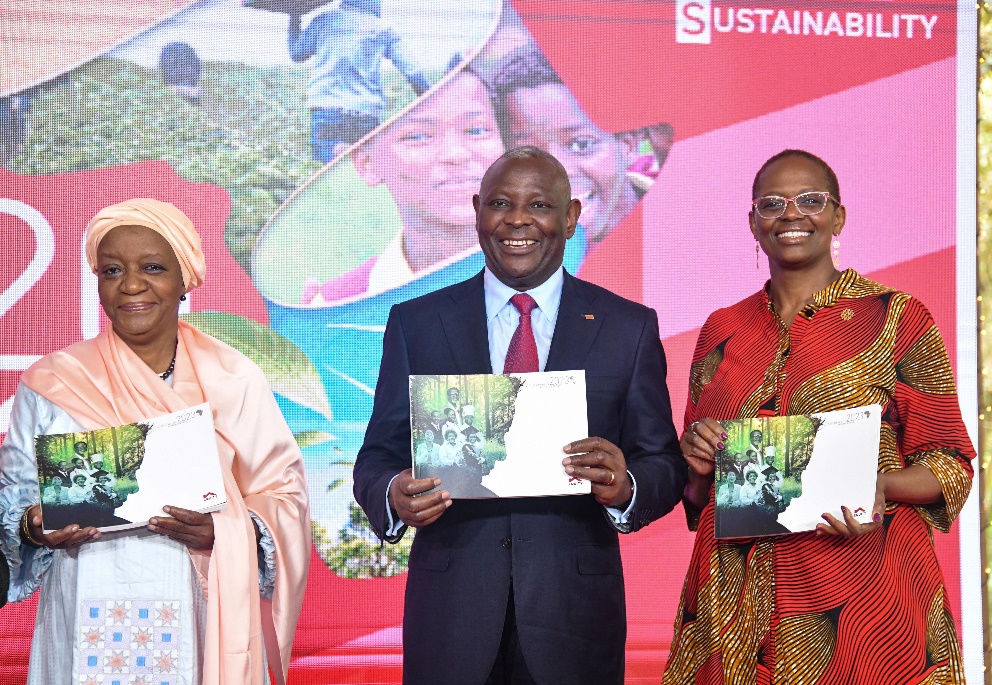
Equity green finance Africa drives mass-market climate solutions, funding solar, agriculture, and MSMEs for sustainable development.
Equity Green Finance Africa: Scaling Climate Impact at the Base
Equity Group Holdings is leading the charge in Equity green finance Africa, placing climate-smart financing directly into the hands of smallholder farmers, micro, small and medium enterprises (MSMEs), and households. As global finance increasingly tilts toward sustainability, the bank has deliberately focused on mass-market climate inclusion, thereby delivering measurable economic and environmental outcomes at scale.
At the center of this strategy sits the Equity Group Foundation, which channels blended finance and donor capital into solar, biogas, irrigation, and climate-smart agriculture solutions. Furthermore, the 2025 Integrated Annual Report indicates that the group has committed over $500 million (≈ KSh 64.5 billion) toward climate-related financing, reaching millions of smallholder farmers and MSMEs.
Image suggestion: Smallholder farmers using solar irrigation
Alt text: “Equity green finance Africa solar irrigation impact”
Scaling Climate Finance at the Base of the Economy
In contrast to peers such as Stanbic Bank Kenya, which prioritize structured ESG corporate lending, Equity has chosen a different path. Instead, the bank deploys small-ticket, high-volume financing, enabling rapid adoption of green technologies among underserved communities.
To illustrate, the bank’s 2025 initiatives include:
- Solar home systems and off-grid energy financing
- Biogas and clean cooking solutions for households
- Climate-smart agriculture inputs such as irrigation kits and drought-resistant seeds
Additionally, partnerships with World Bank financial inclusion programs have expanded outreach across rural economies. As a result, climate resilience is embedded directly into livelihoods, rather than remaining a top-down policy ambition.
Real-Life Impact Across Communities
Across regions, the results are increasingly visible. In western Kenya, for instance, a group of 100 smallholder maize farmers accessed solar-powered irrigation systems financed through Equity-backed programs. Consequently, their yields rose by approximately 30% within a single season.
At the same time, micro-enterprises in Kisumu adopting biogas systems have reported energy cost reductions of up to 40%, while also lowering dependence on charcoal. Taken together, these outcomes highlight how Equity’s climate inclusion model converts capital into measurable impact, rather than abstract sustainability commitments.
Image suggestion: Biogas-powered SME in Kisumu
Alt text: “Equity green finance Africa clean energy SME”
Distribution as a Strategic Advantage
Crucially, Equity’s strength lies not in complex product design but in distribution scale. With one of the largest customer bases in Africa, the bank leverages multiple channels to expand access efficiently.
For example:
- Mobile and agency banking platforms extend reach into remote regions
- A customer base exceeding 14 million in Kenya supports rapid rollout
- Community-based engagement strengthens grassroots adoption
Because of this, the bank scales Equity green finance Africa far more effectively than competitors. In contrast to traditional banking models, it penetrates informal economies where collateral is limited but demand remains strong.
A Different Approach to ESG
Rather than focusing on headline ESG transactions, Equity has built a model centered on inclusion. Specifically, its approach prioritizes climate inclusion at scale, livelihood-linked financing, and economic resilience in underserved communities.
Moreover, this framework aligns closely with global financial inclusion standards, which emphasize access as the primary constraint in emerging markets. Consequently, the bank demonstrates that sustainability can be achieved through breadth of access, not just financial structuring.
Strategic Trade-Offs and Market Position
Naturally, this approach involves trade-offs. On one hand, Equity delivers broad-based impact and deep market penetration. On the other, it generates fewer high-profile ESG transactions compared to peers.
For comparison:
- Stanbic Bank Kenya focuses on structured ESG and sustainability-linked loans
- KCB Group emphasizes large-scale infrastructure financing
- Absa Bank Kenya drives ESG product innovation
Even so, Equity’s model stands apart. By prioritizing scale over sophistication, it positions itself as East Africa’s largest climate inclusion engine.
Global Context and Future Outlook
Across emerging markets, demand for climate finance continues to rise. At the same time, investors are increasingly seeking models that combine financial returns with measurable impact.
In this context, Equity’s approach offers a compelling blueprint. Not only does it attract development finance, but it also appeals to private capital focused on sustainability outcomes. Furthermore, its scalability makes it adaptable across African markets where smallholder farmers and MSMEs dominate economic activity.
Conclusion: Redefining Green Finance
Ultimately, Equity Group Holdings is reshaping the meaning of green finance in Africa. By deploying over $500 million into solar, biogas, and climate-smart agriculture, the bank is embedding sustainability directly into everyday economic activity.
While competitors focus on structuring large ESG deals, Equity is transforming livelihoods at scale. Therefore, the future of Equity green finance Africa may not lie in financial complexity but in access, distribution, and measurable real-world impact.
Commercial Banking
Stanbic vs Rivals in Kenya’s Green Finance Race
KCB is financing large green infrastructure and corporate projects. Its strength lies in balance sheet capacity.
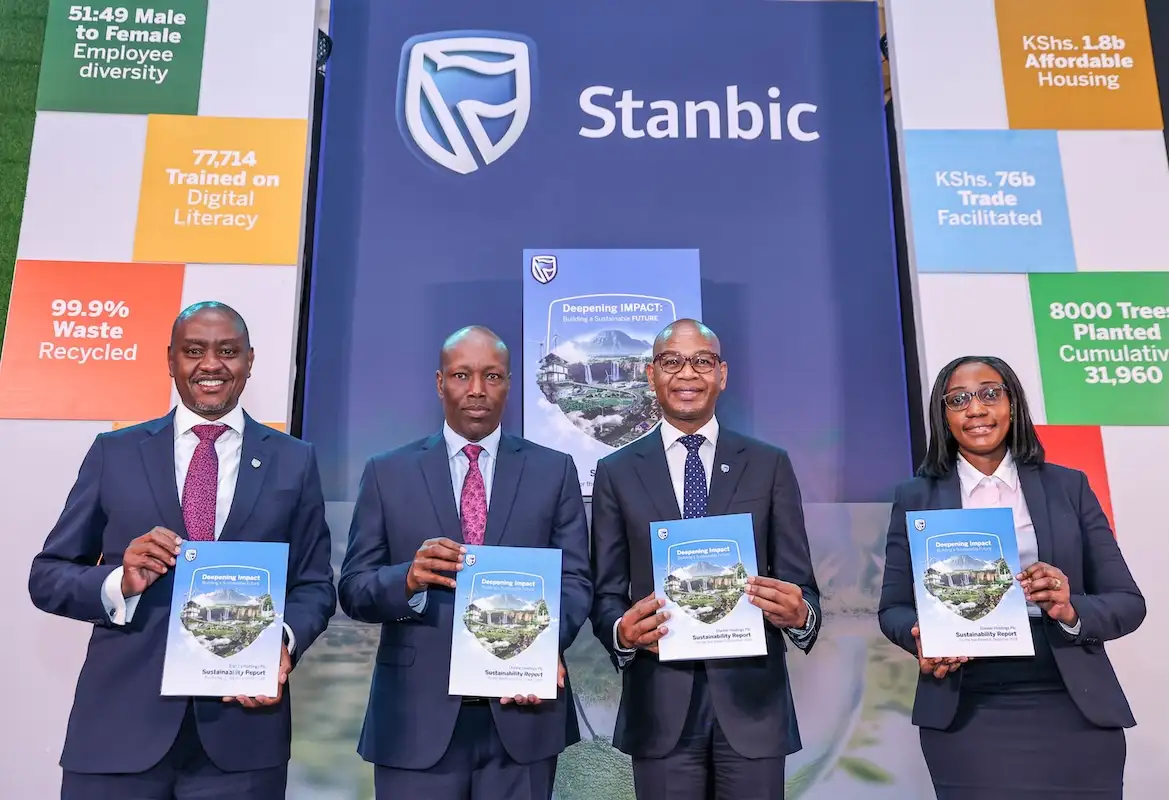
Stanbic, Equity, KCB and Absa are racing to dominate green finance in Kenya. Here’s how their ESG strategies compare in 2025.
Kenya’s Green Finance Battle: Who Is Really Leading?
Kenya’s banking sector is entering a decisive phase in climate finance, with Stanbic Bank Kenya, Equity Group Holdings, KCB Group and Absa Bank Kenya all scaling environmental, social and governance (ESG) lending.
But beneath the shared narrative of sustainability lies a clear divergence in strategy, execution and scale.
Stanbic: Structured ESG as a Core Banking Model
Stanbic has taken perhaps the most institutionally embedded approach to green finance.
Its model is defined by:
- ESG screening integrated into all large loans
- Active structuring of sustainability-linked deals
- Target to green ~10% of its loan book
The bank’s participation in a KSh 15 billion (≈ $116 million) sustainability-linked loan for Safaricom illustrates its edge—not just lending, but structuring performance-based ESG financing.
Crucially, Stanbic is leveraging its parent, Standard Bank Group, to align with global climate finance standards—giving it stronger access to international capital.
👉 Positioning: Most sophisticated ESG structurer in Kenya
Equity Group: Scale and Climate Inclusion at the Base
Equity Group Holdings is taking a different route—focusing on scale and mass-market climate financing.
Through its foundation and partnerships, Equity has:
- Committed over $500 million toward climate finance initiatives
- Financed clean energy solutions such as solar kits and biogas
- Targeted millions of smallholder farmers and MSMEs
Its model is less about complex ESG instruments and more about broad-based climate inclusion.
Equity’s strength lies in distribution—its vast customer base allows it to push green products deep into rural and informal markets.
👉 Positioning: Largest climate inclusion engine
KCB Group: Corporate Green Deals and Balance Sheet Strength
KCB Group sits somewhere between Stanbic and Equity.
Its strategy focuses on:
- Large-scale corporate and infrastructure financing
- Green project funding (energy, manufacturing, agribusiness)
- Regional expansion of ESG lending
KCB has committed billions toward sustainable finance and is actively aligning with global frameworks such as the UN Principles for Responsible Banking.
However, its ESG model remains more portfolio-driven than structurally embedded, compared to Stanbic.
👉 Positioning: Corporate-scale green financier
Absa Kenya: ESG Integration and Product Innovation
Absa Bank Kenya is focusing on product innovation and internal ESG alignment.
Key initiatives include:
- Green bonds and sustainable finance products
- Internal carbon reduction strategies
- SME-focused green financing
Absa has also been active in advisory and structuring roles, though at a smaller scale compared to Stanbic.
Its strength lies in financial engineering and ESG product design, but it is still building scale.
👉 Positioning: Emerging ESG product innovator
Where the Real Differences Lie
1. Depth vs Breadth
- Stanbic: Deep, structured ESG integration
- Equity: Wide, mass-market reach
- KCB: Large corporate deals
- Absa: Product innovation
2. Type of Green Finance
- Stanbic: Sustainability-linked loans, structured ESG deals
- Equity: Solar, agriculture, MSME financing
- KCB: Infrastructure and corporate green lending
- Absa: Green bonds, advisory, niche products
3. Access to Global Capital
- Stanbic: Strong (via Standard Bank Group)
- Equity: Strong (DFI partnerships)
- KCB: Moderate to strong
- Absa: Growing
The Strategic Divide: Two Competing Models
Kenya’s green finance market is effectively splitting into two dominant models:
🔹 1. Institutional ESG Finance (Stanbic Model)
- Structured deals
- Performance-linked lending
- Global capital alignment
🔹 2. Mass Climate Inclusion (Equity Model)
- High-volume lending
- Rural and SME penetration
- Development-driven approach
KCB and Absa operate in hybrid territory between these poles.
Who Is Winning?
The answer depends on the metric:
- Most advanced ESG structuring: Stanbic
- Biggest reach and impact: Equity
- Largest corporate deals: KCB
- Most innovative products: Absa
But in terms of future positioning, Stanbic’s model may offer the strongest leverage.
Why?
Because global capital is increasingly flowing toward:
- Measurable ESG outcomes
- Structured sustainability-linked instruments
- Banks with integrated climate risk frameworks
The Bigger Picture: A Market Entering Maturity
Kenya is one of Africa’s most advanced green finance markets, supported by:
- Over 80% renewable energy generation
- Strong regulatory backing
- Growing investor interest in ESG assets
This is pushing banks to move beyond narrative into execution and measurable impact.
Conclusion: A Defining Decade for Green Banking
The competition between Stanbic, Equity, KCB and Absa is not just about market share—it is about defining the future model of African banking.
- Will it be structured, globally aligned ESG finance?
- Or mass-market climate inclusion at scale?
For now, Kenya is hosting both experiments in real time.
And for investors watching closely, one thing is clear:
green finance is no longer optional—it is the next battleground for banking dominance in Africa.
Commercial Banking
Stanbic Green Finance Push Accelerates
Stanbic is targeting at least 10% of its portfolio as green. The shift reflects a structural change in lending strategy.
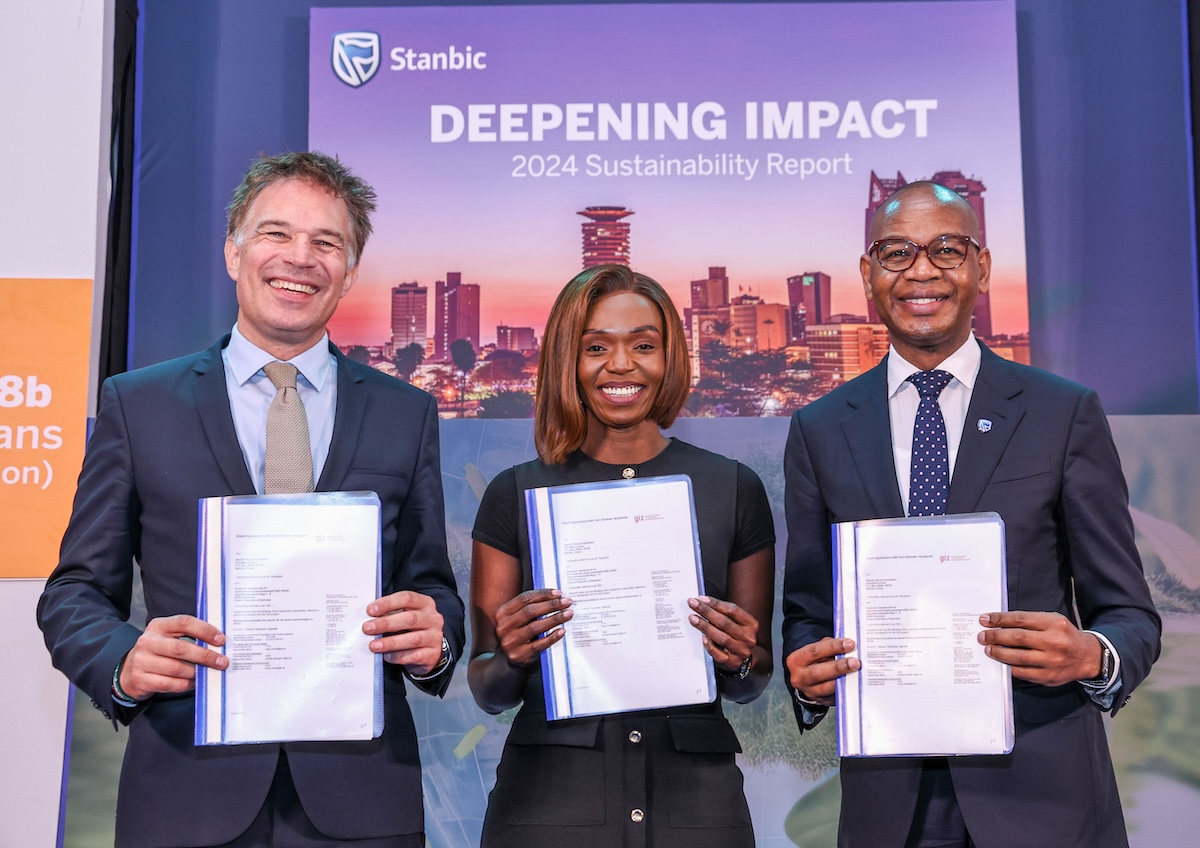
Stanbic Bank Kenya scales green finance in 2025, expanding solar loans, ESG deals and climate-linked funding to back Kenya’s transition.
Stanbic’s Green Finance Strategy Enters Scale Phase
Stanbic Bank Kenya is accelerating its transition into a sustainability-led lender, scaling climate finance across its portfolio in 2025 as it positions itself at the centre of Kenya’s green economic shift.
Building on momentum from its latest sustainability disclosures, the bank has moved beyond policy commitments into active capital deployment across renewable energy, green real estate and sustainability-linked corporate financing.
This is no longer ESG as narrative—this is ESG as balance sheet strategy.
2025: From Commitments to Capital
Stanbic’s green finance activity in 2025 reflects a clear acceleration phase.
The bank expanded its renewable energy lending, issuing over KSh 500 million (≈ $3.9 million) in solar financing, while deepening participation in sustainability-linked transactions tied to measurable environmental outcomes, as detailed in recent sector reporting.
At the corporate level, Stanbic also participated in a KSh 15 billion (≈ $116 million) sustainability-linked loan for Safaricom, one of Kenya’s largest ESG-linked financings to date, where pricing is tied directly to environmental performance targets.
This signals a structural shift: capital is increasingly being priced against sustainability metrics.
Leadership Signal: ESG as Core Strategy
Stanbic’s leadership has been explicit about the shift.
Speaking in recent sustainability updates, Joshua Oigara emphasized that “sustainability is embedded in how we allocate capital and manage risk,” reinforcing the bank’s transition toward climate-aligned lending.
This marks a departure from traditional banking models, where environmental considerations were often peripheral. At Stanbic, ESG is now integrated into:
- Sector selection
- Credit structuring
- Risk assessment frameworks
Every major deal is increasingly screened through an environmental and social lens.
Green Portfolio Expansion and Targets
Stanbic’s green portfolio is steadily expanding, with sustainability-linked lending now accounting for a growing share of its overall loan book.
The bank is targeting at least 10% of its portfolio to be green or sustainability-linked, building on an estimated 8% base achieved by 2024, according to industry disclosures and sustainability reporting.
Key sectors driving this growth include:
- Renewable energy (solar and distributed power systems)
- Sustainable agriculture (climate-resilient inputs and irrigation)
- Green real estate (energy-efficient buildings)
- E-mobility (low-emission transport financing)
This sectoral diversification reflects a deliberate alignment with Kenya’s climate priorities.
Financing Kenya’s Energy Transition
Kenya already generates more than 80% of its electricity from renewable sources, making it one of Africa’s clean energy leaders.
Stanbic is positioning itself as a key financial intermediary in scaling this transition further, particularly in distributed solar and commercial energy solutions.
Through targeted solar lending and project financing, the bank is supporting:
- SMEs transitioning to off-grid solar
- Commercial and industrial energy users
- Real estate developers integrating green technologies
Internally, the bank is also advancing sustainability, including solar adoption across its own operations, reinforcing credibility with ESG-focused investors.
Structuring the Future: ESG-Linked Finance
Beyond direct lending, Stanbic is playing an increasingly important role in structuring ESG-linked financial instruments.
The Safaricom sustainability-linked facility represents a broader trend where:
- Loan pricing is tied to emissions reductions
- Borrowers commit to measurable ESG targets
- Banks embed sustainability into deal structures
This model is gaining traction globally—and Stanbic is among the early movers in East Africa.
Competitive Advantage in a Crowded Market
Stanbic’s green finance strategy provides a clear differentiator in Kenya’s banking sector.
Three advantages stand out:
1. Integrated ESG Risk Framework
Unlike many competitors, Stanbic embeds climate risk directly into credit decision-making.
2. Deal Structuring Capability
The bank is active not just in lending, but in structuring complex sustainability-linked transactions.
3. Global Alignment
Through its parent, Standard Bank Group, Stanbic aligns with global ESG standards, enhancing its ability to attract international capital.
This positions the bank as a bridge between global climate finance and local economic opportunities.
The Global Capital Angle
Climate finance is rapidly becoming one of the most important capital flows into emerging markets.
With global investors increasingly allocating funds toward ESG-compliant assets, Stanbic’s positioning offers a strategic advantage:
- Access to development finance institutions
- Alignment with global climate frameworks
- Ability to intermediate large-scale green capital flows
In effect, the bank is not just financing projects—it is building a pipeline for international climate capital into Kenya.
Conclusion: Banking on the Green Transition
Stanbic Bank Kenya’s green finance push has entered a decisive phase in 2025.
With KSh 500 million ($3.9 million) already deployed in solar lending, active participation in $116 million ESG-linked deals, and a clear roadmap toward greening its loan book, the bank is transforming sustainability into a core business line.
For global investors and policymakers, the message is unmistakable:
Stanbic is positioning itself not just as a bank—but as a climate finance platform for East Africa.


Equity Green Finance Africa Leads Growth

Stanbic vs Rivals in Kenya’s Green Finance Race

Stanbic Green Finance Push Accelerates


-

 Commercial Banking6 days ago
Kenya Banks Competitive Growth Insights 2026
-

 Commercial Banking4 days ago
Standard Bank Growth Plan Faces Africa Risks
-
 Boardroom Leadership6 days ago
East Africa Women CEOs 2025 Rankings
-

 Insurance7 days ago
Top 10 Capitalized Insurers in East Africa 2025
-

 Entrepreneur6 days ago
East Africa’s Richest 2025: Top 10 Revealed
-
 Commercial Banking4 days ago
Kenya Capital Drive Faces Execution Test
-

 Commercial Banking3 days ago
HF Group Profit Hits Record on Bond Strategy
-

 Commercial Banking4 days ago
ABSA Kenya FY2025 Profit Soars Amid Group Growth